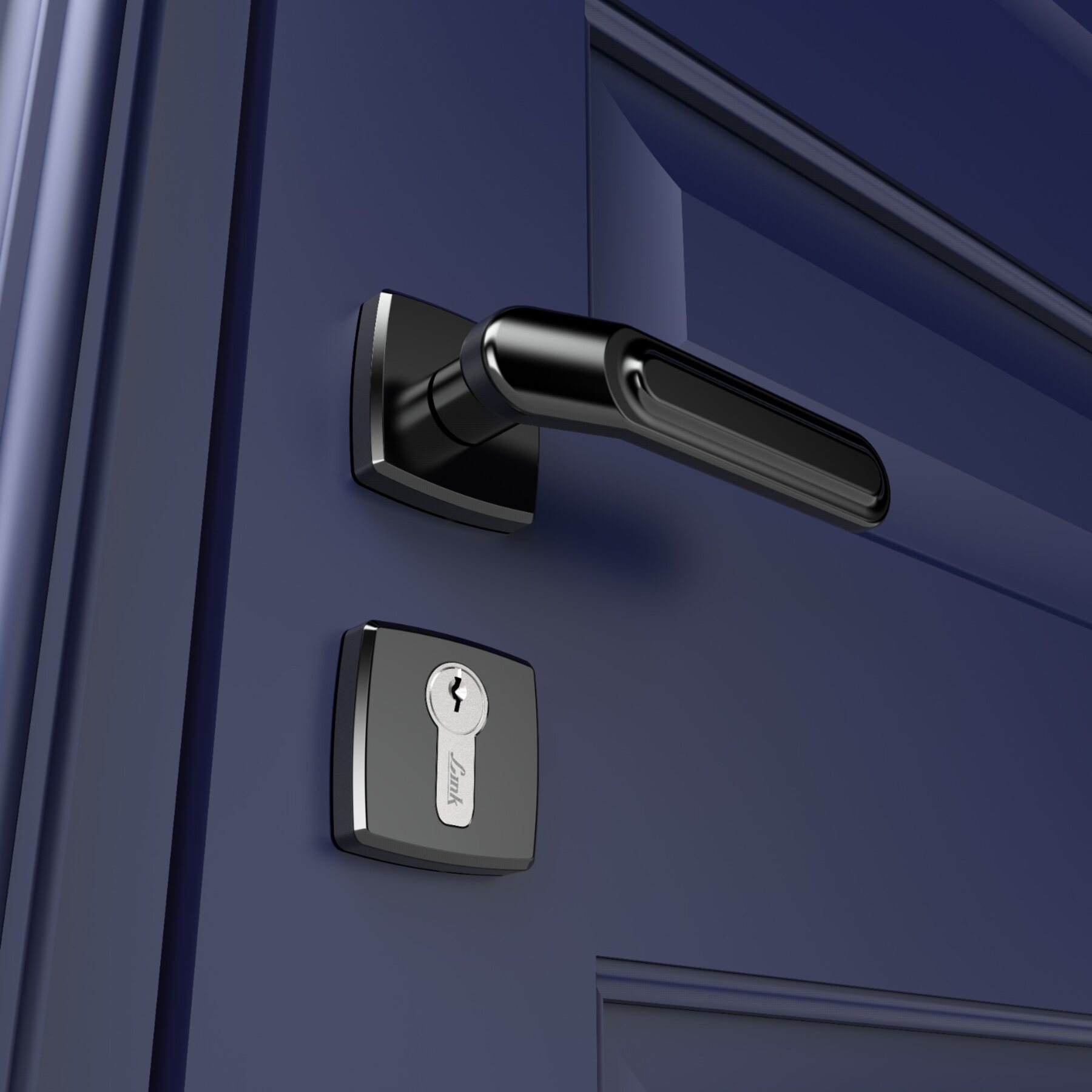
A lever-handle and padlock programme for Link — designed as one engineering system rather than a list of SKUs. Five lever silhouettes share a single backplate and mechanism; three padlock bodies share one security architecture. This is a working record of how that system was drawn, toleranced and finished.
Company
Link
Category
Architectural Hardware
Scope
Product design, CAD, finish spec
Artifacts shown
5 levers, 2 padlock families
Chapter 01
Lever Handles
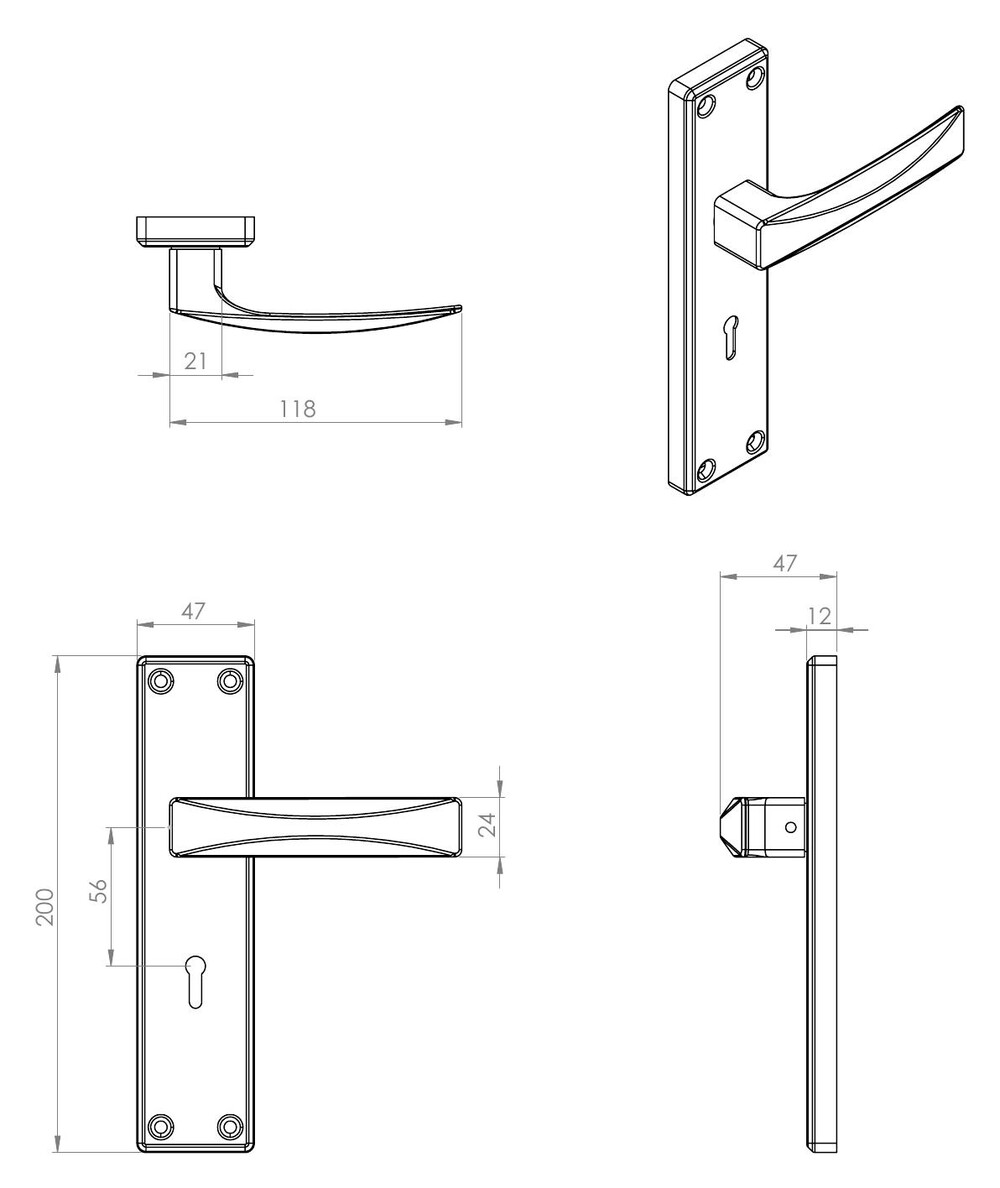
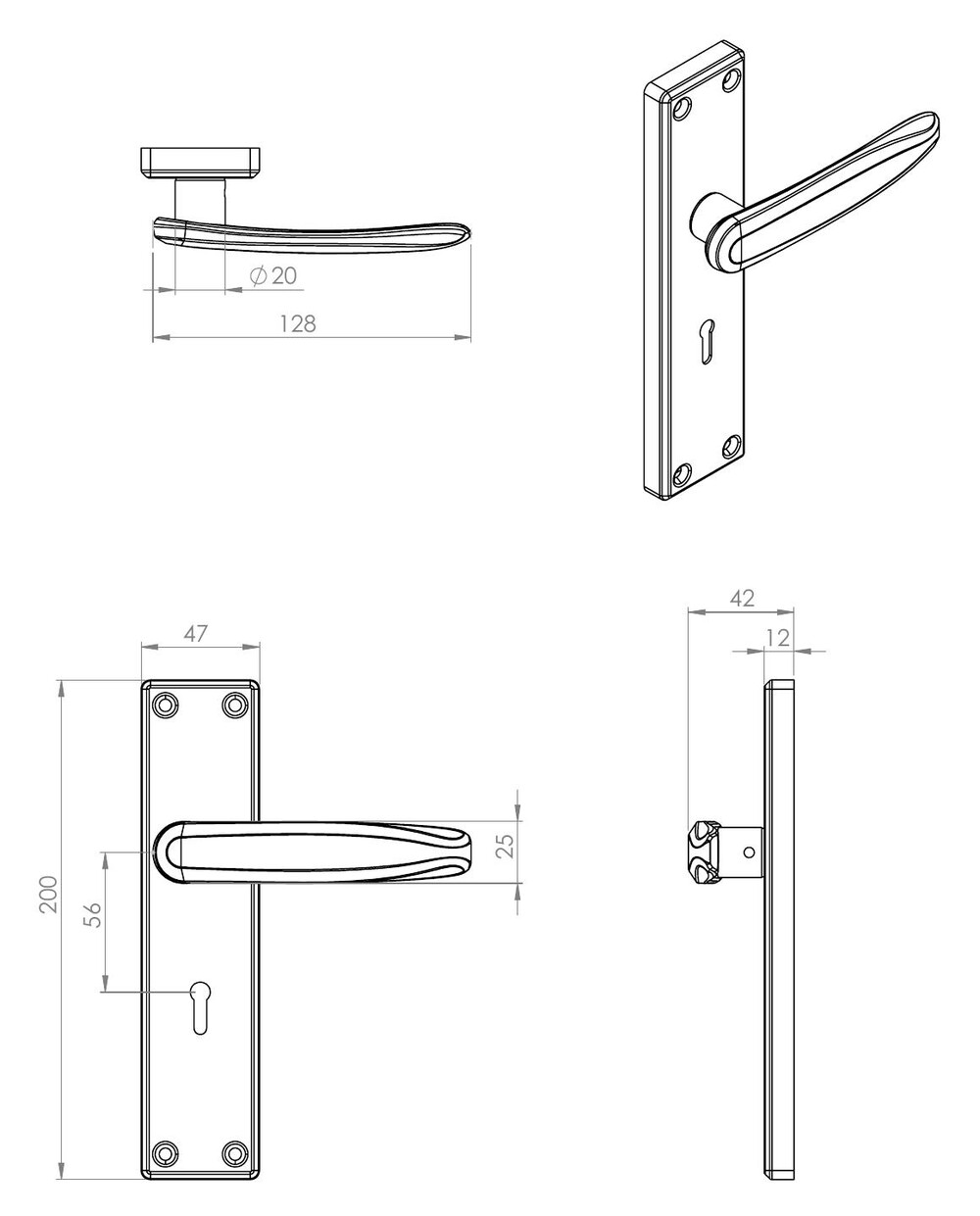
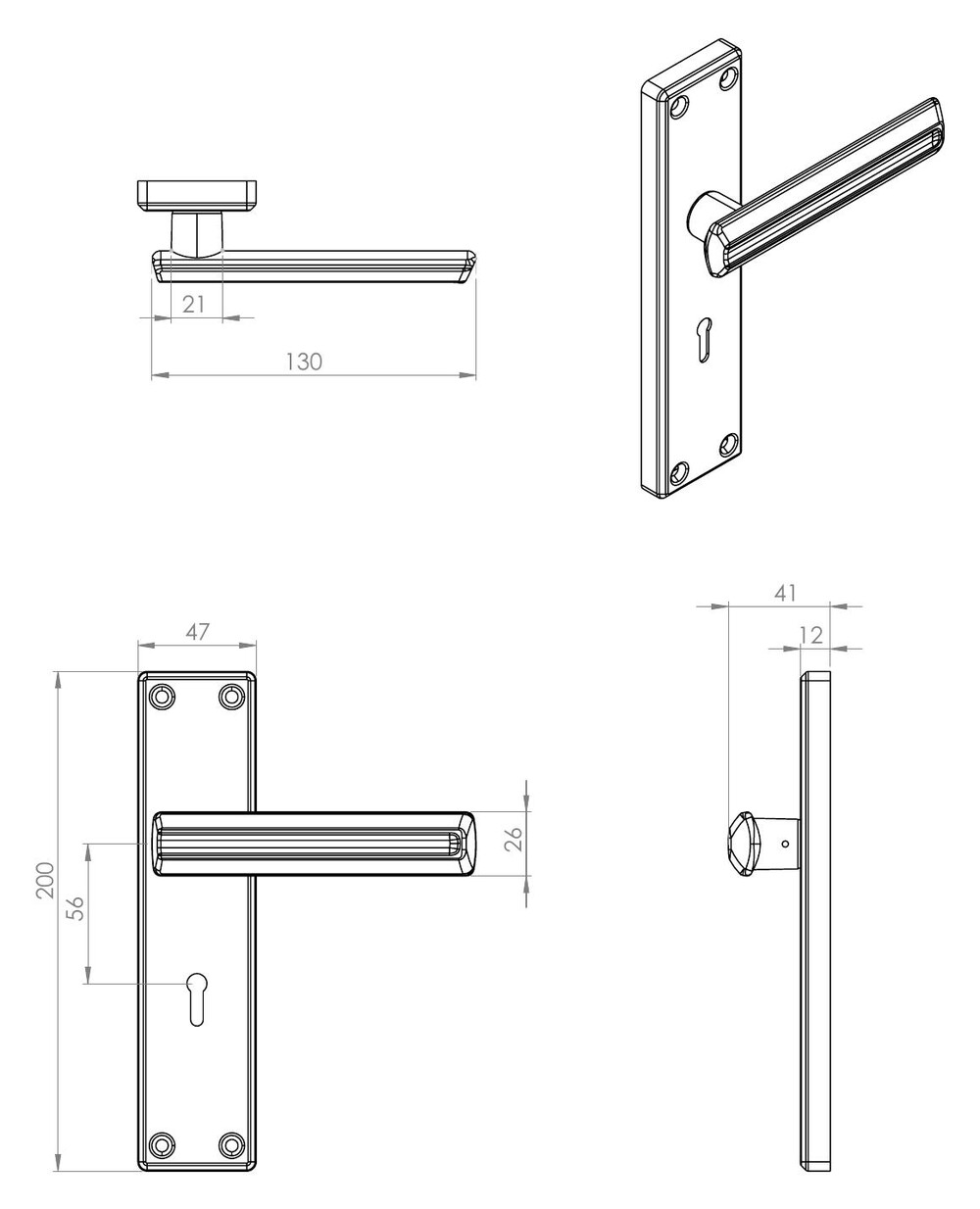
Five handles, one plate. Every lever in the range was drawn to close onto the same 47 × 200 mm backplate and the same 56/24 mm fixing centres — so the design problem was never "draw a handle," it was "draw five grips that all agree with one hinge, one spindle and one hand."
01.1 — Range
Five Profiles, One Plate
Backplate
47 × 200 mm
Fixing centres
56 / 24 mm
Barrel Ø
20–21 mm
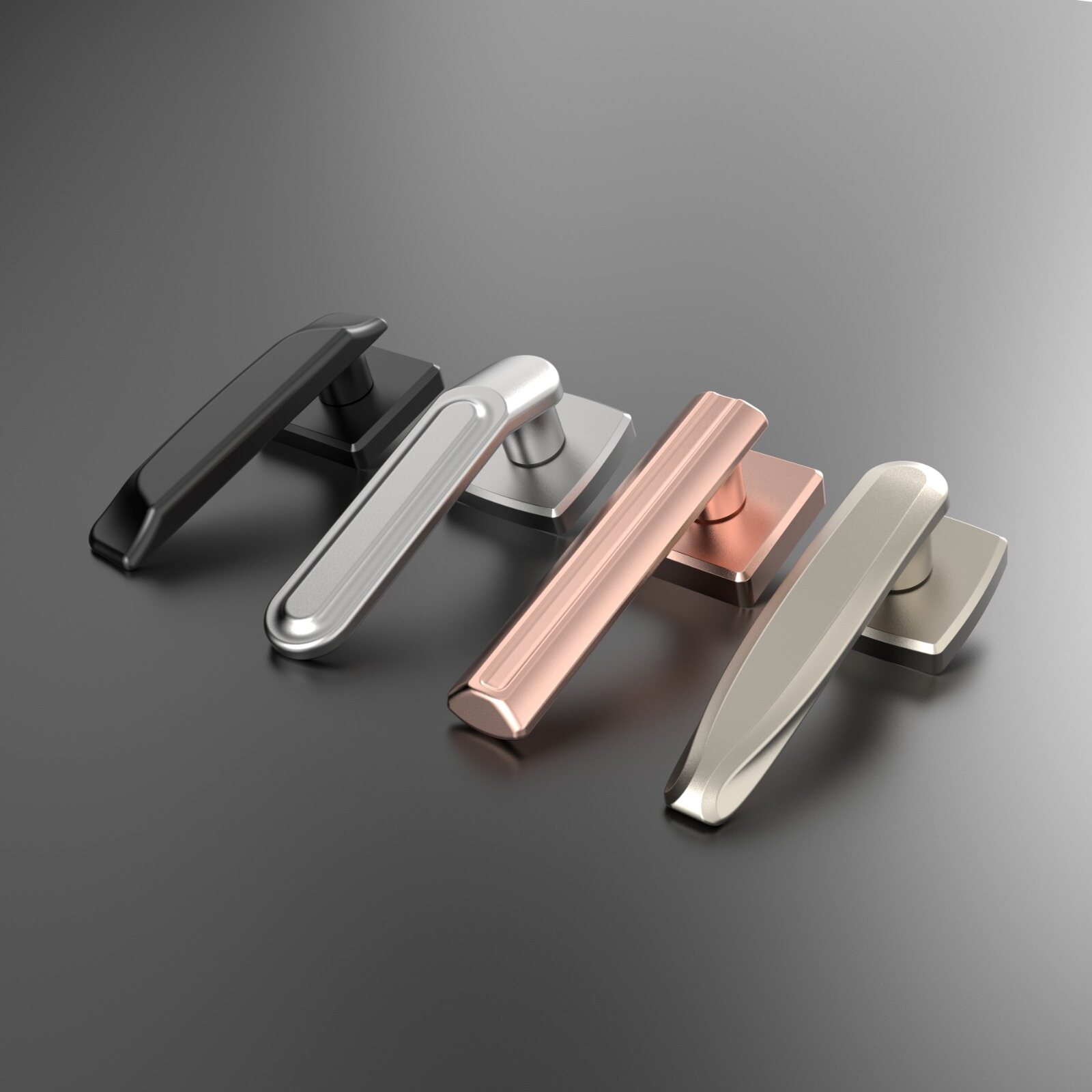
A curved swoosh, a bulged double-taper, a straight fluted bar — each lever reads differently in the hand and on the door, but every one returns to the identical plate footprint, so the range can be specified into the same door prep without re-tooling. It's a quieter kind of range-building: variety at the point of contact, discipline everywhere behind it.
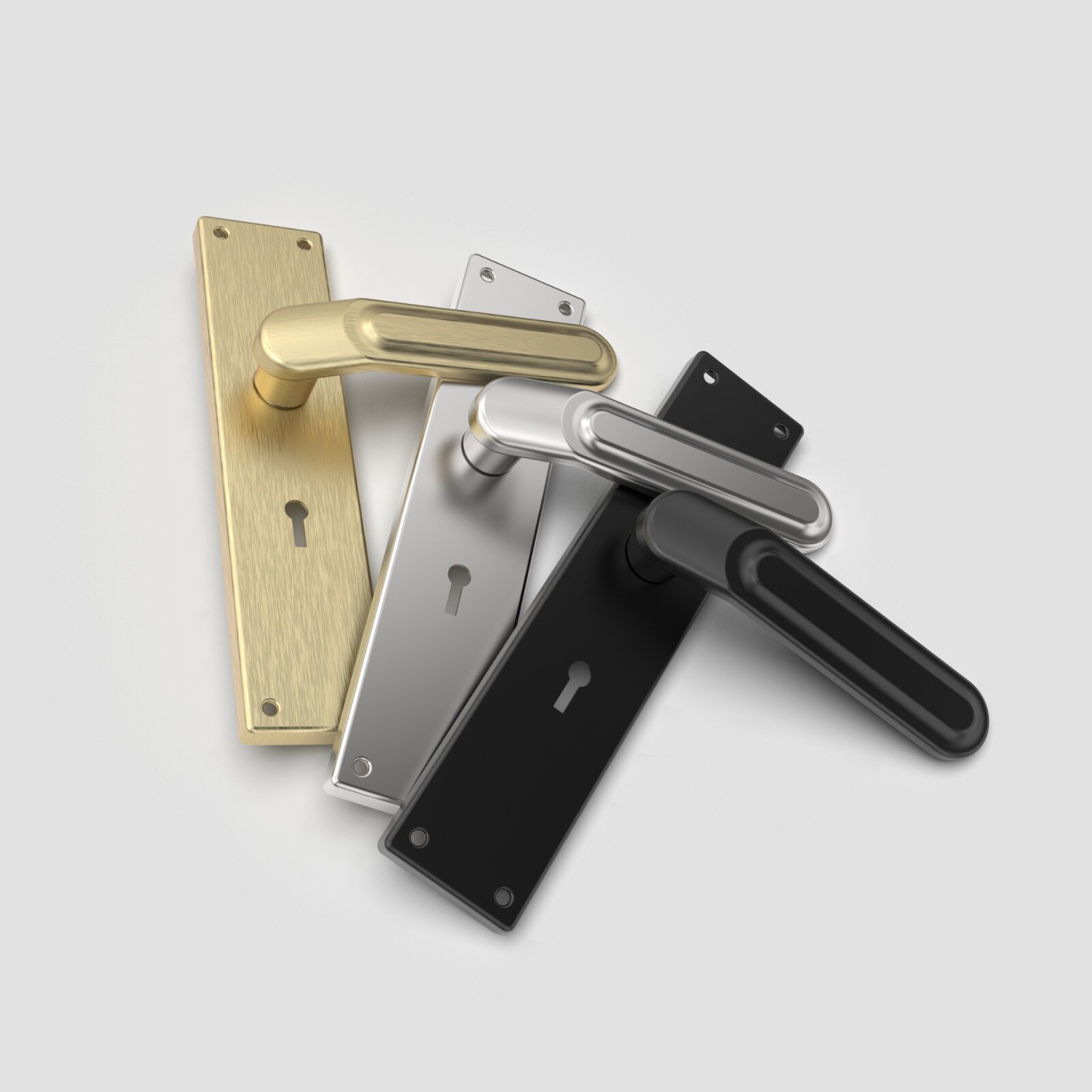
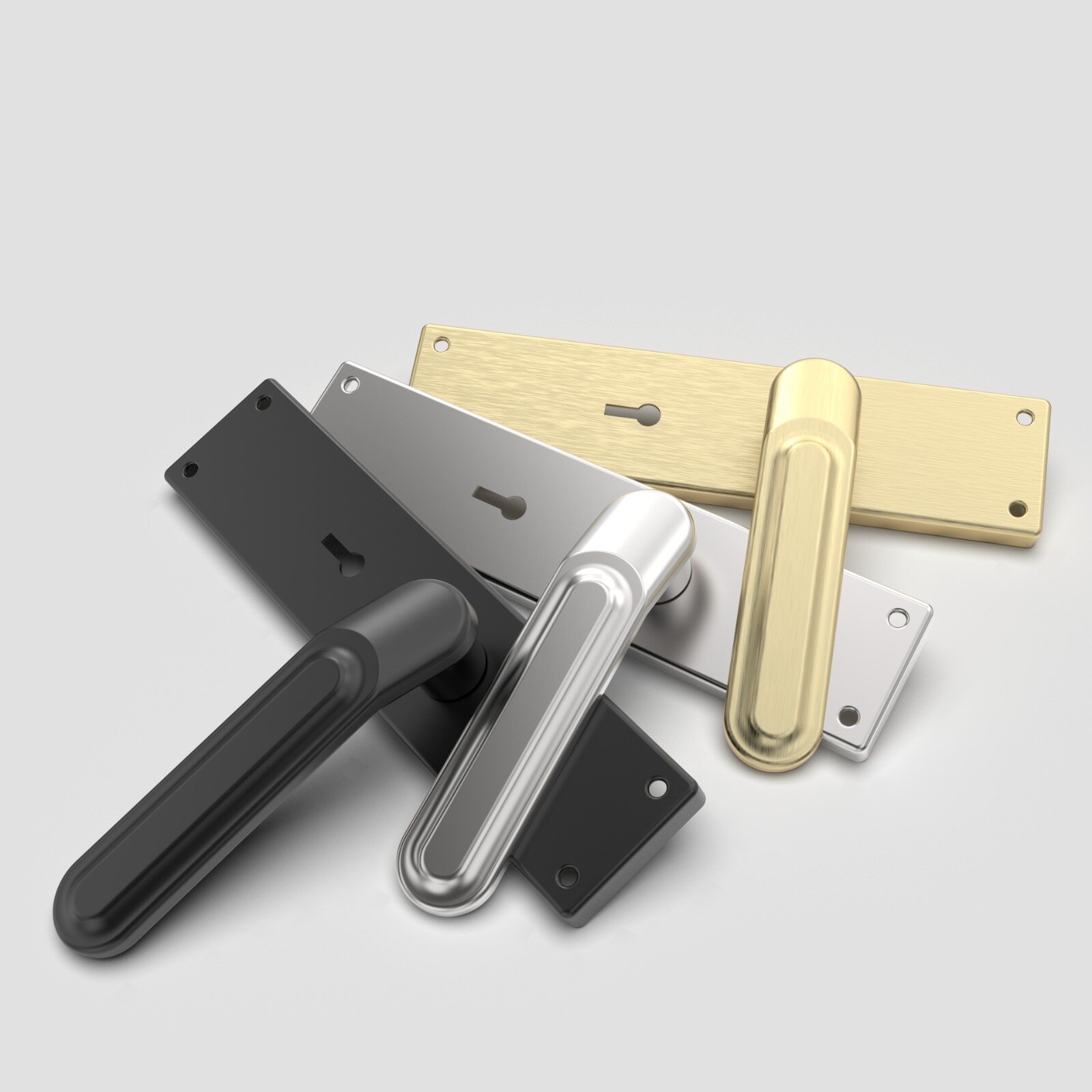
The four core lever silhouettes, unmounted
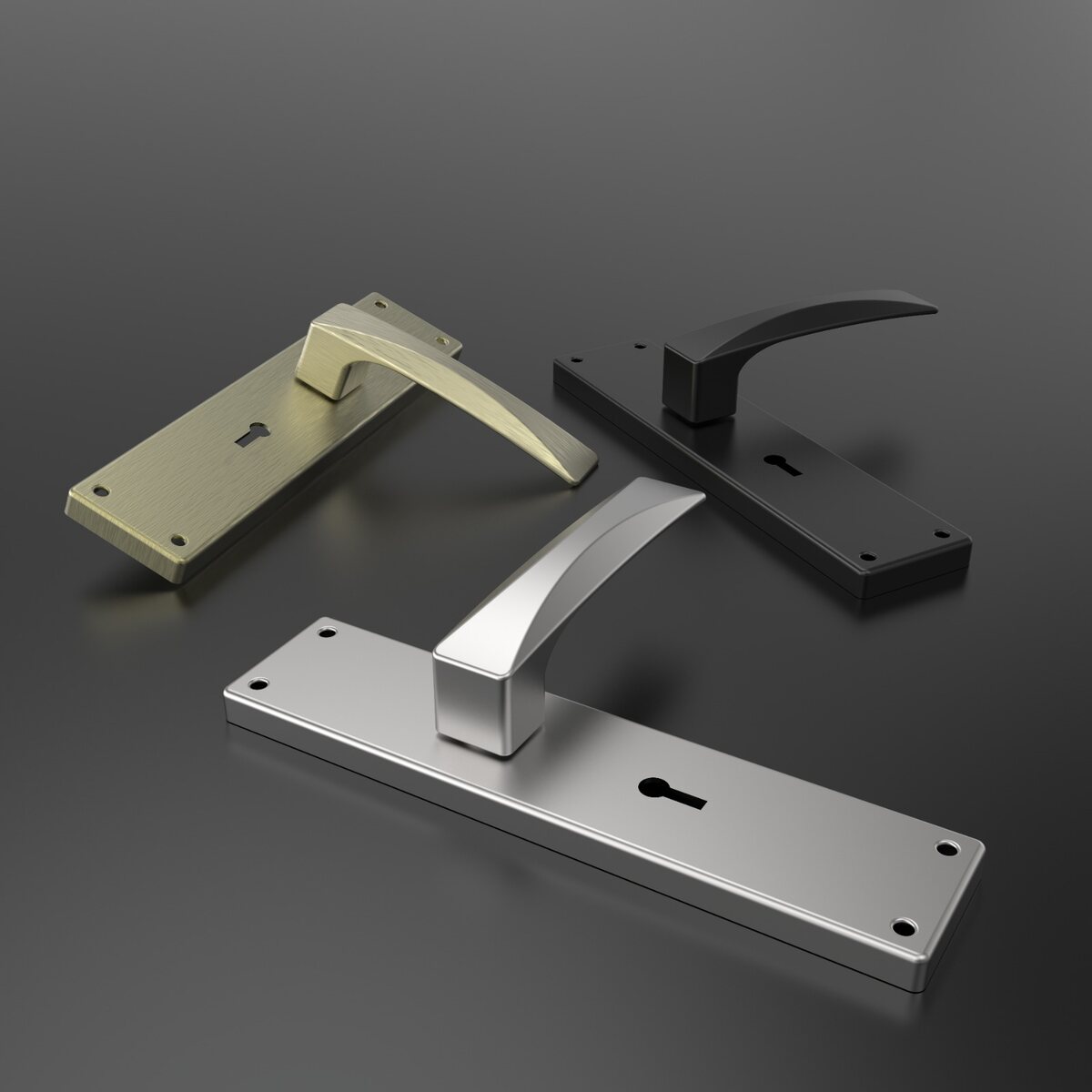
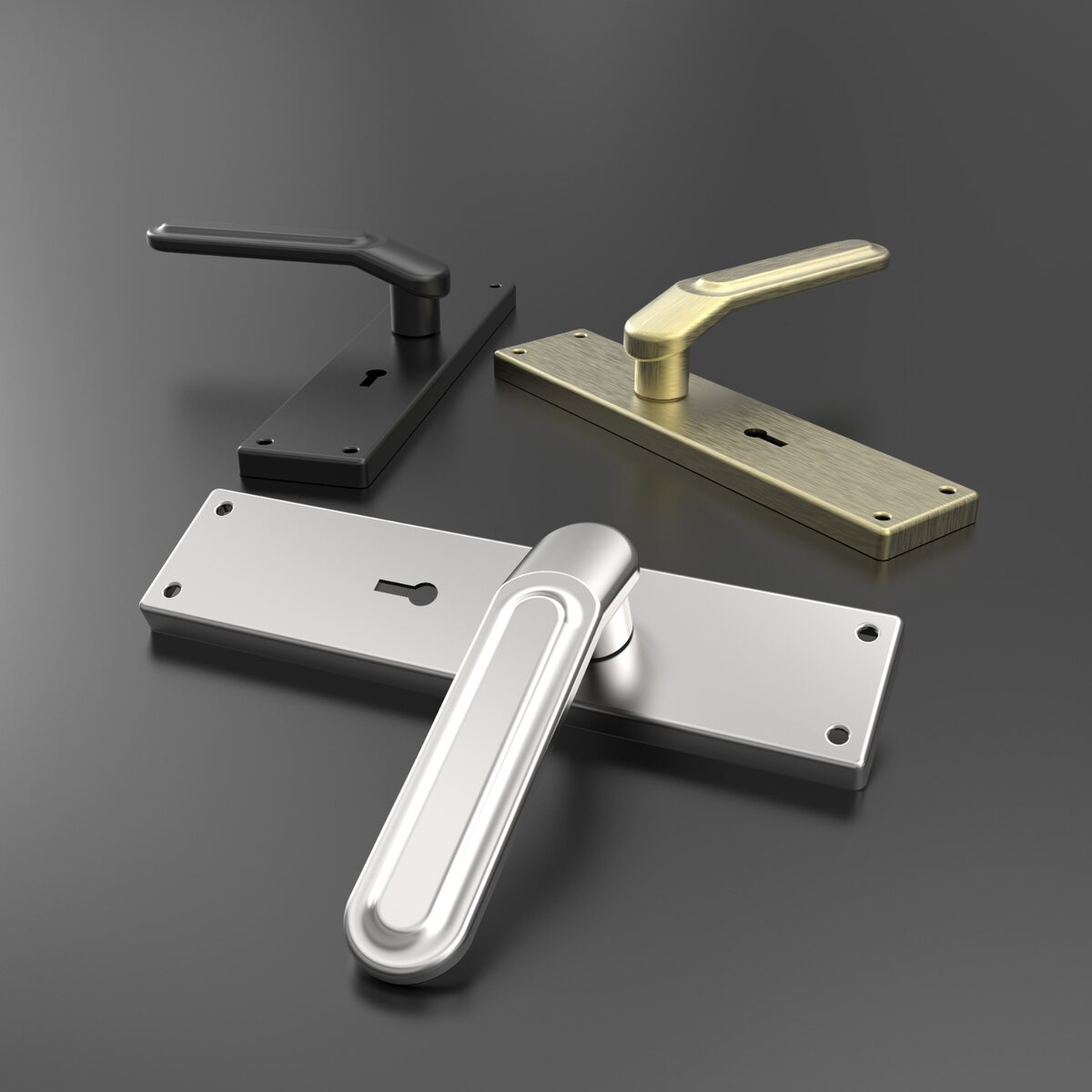
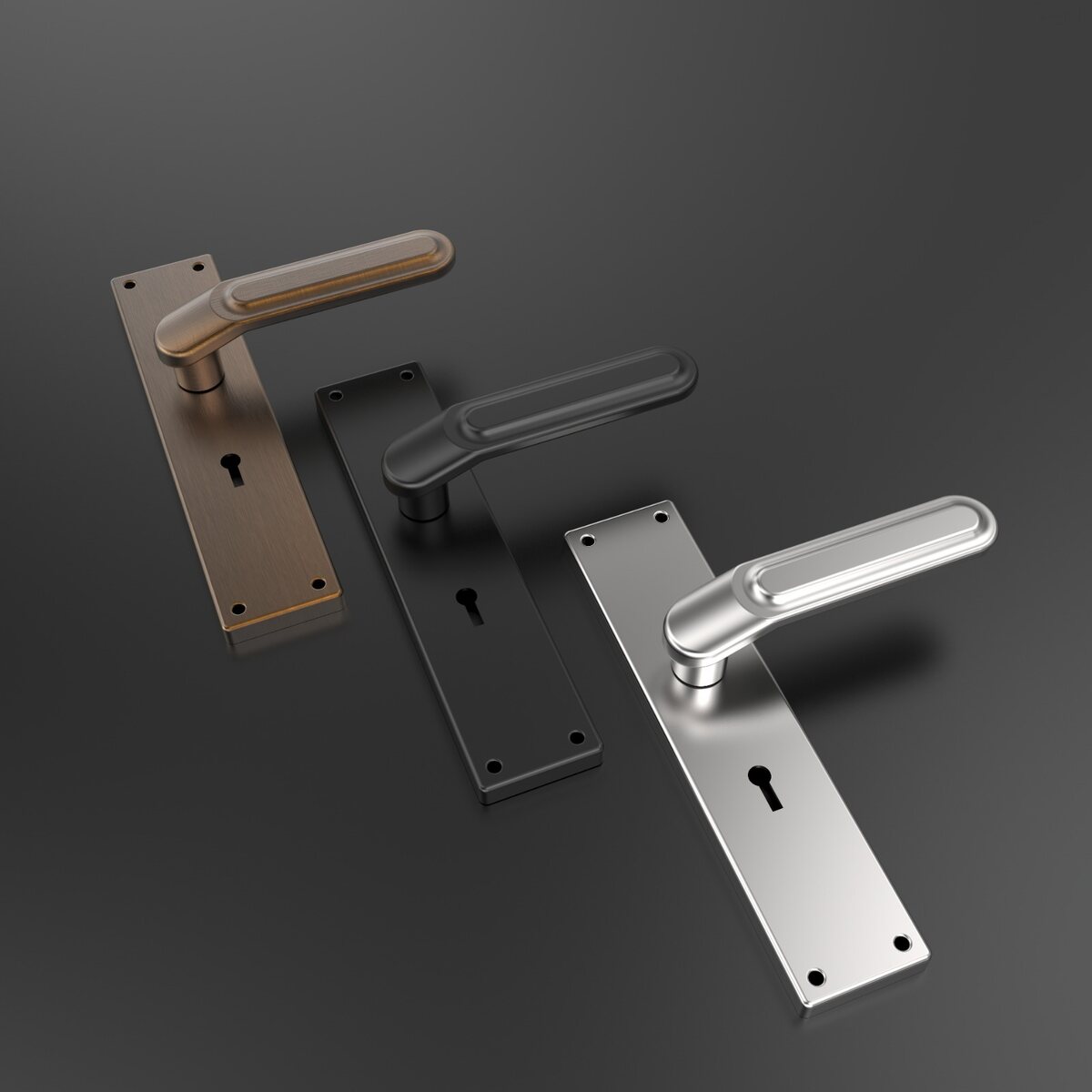
Fluted-bar profile — mounted, three finishesSwoosh profile — mounted, three finishes
01.2 — Ergonomics
Drawn to the Hand
Projection
118–130 mm
Rotation
~35°
The barrel sits at 20–21 mm across — close to the width the second knuckle crease naturally closes around, so four fingers make full contact without over-gripping. Lever projection runs 118–130 mm across the range, long enough for a low-effort elbow-of-the-hand push, short enough that the knuckles never approach the door face through the full ~35° swing.
Full-wrap grip. Barrel diameter is held to 20–21 mm across all five profiles so the hand closes fully around the bar, with load carried along the concave underside rather than the fingertips.
Throw & clearance. A ~35° swing and 118–130 mm of projection are enough to operate the lever from the base of the palm, while keeping knuckles clear of the door face through the full rotation.
01.3 — Mechanism
Seven Parts, One Spring
Return
Spiral spring
Retention
2 × 14 mm circlip
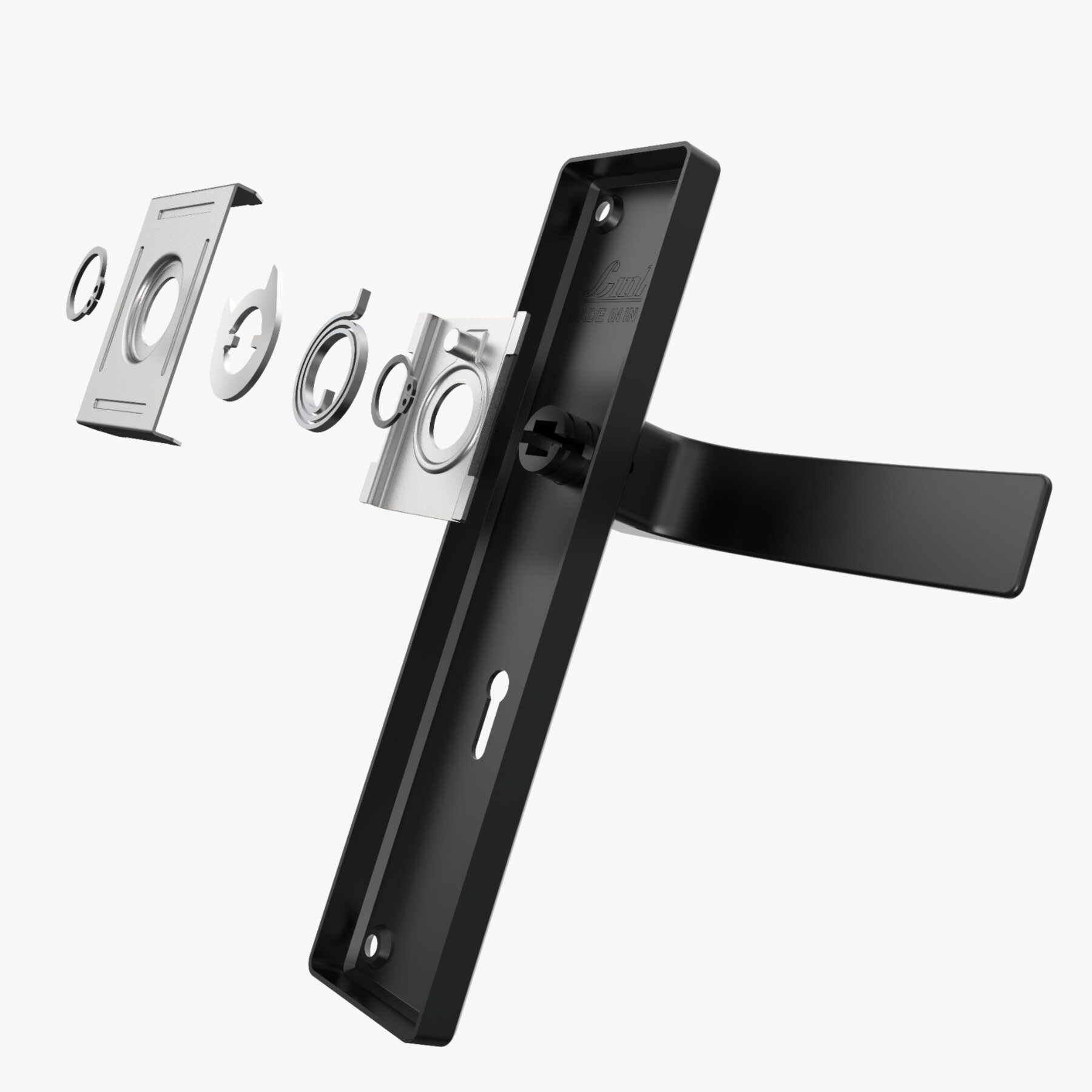
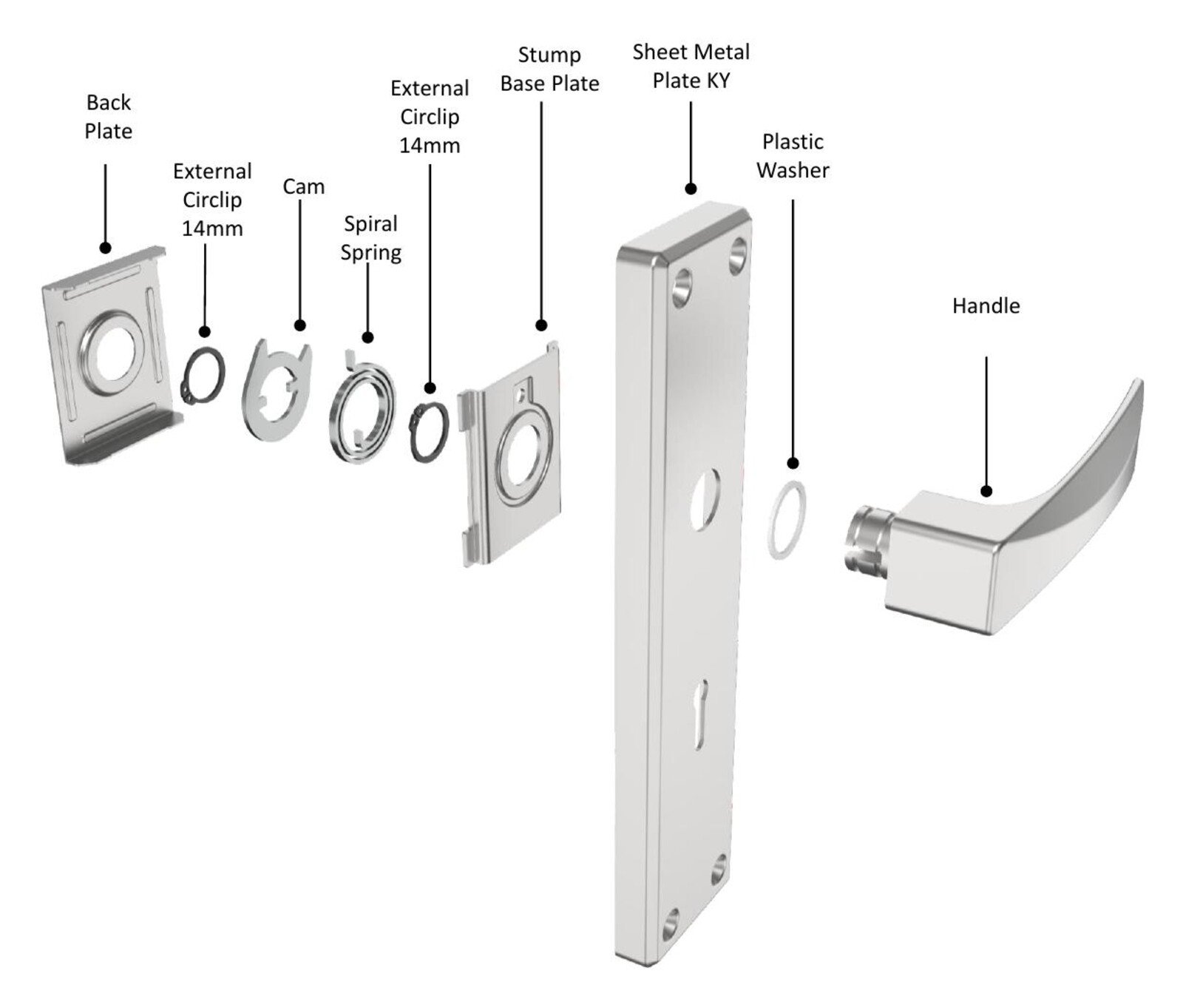
Behind every finish is the same seven-part stack: a stamped back plate, twin circlips, a cam, a spiral spring, a stump base plate and a sheet-metal spindle plate, capped with a plastic washer before the handle itself seats on the square drive. The spring is what gives the lever its self-return — press down, let go, it snaps back level.
Exploded render — full mechanism stack
Component callouts, as issued to tooling
Dimensions and finish notes reproduced as drawn — the plate below is the actual assembly sheet issued for the range.
The same casting carries polished chrome, matte black, brushed brass, rose gold and satin nickel without changing tooling — the finish is a plating and buffing spec, not a design variable. It's what lets the range sit as comfortably in a hospitality lobby as it does on a residential flush door.
Bison and Gravi-T carry the same brief in a different register: a lever handle is judged on feel, a padlock is judged on resistance. Every dimension in this chapter — shackle radius, body clearance, key combination count — exists to answer one of three questions: can it be cut, can it be pried, can it be picked?
The Full Range
One Lock Family, Nine Bodies
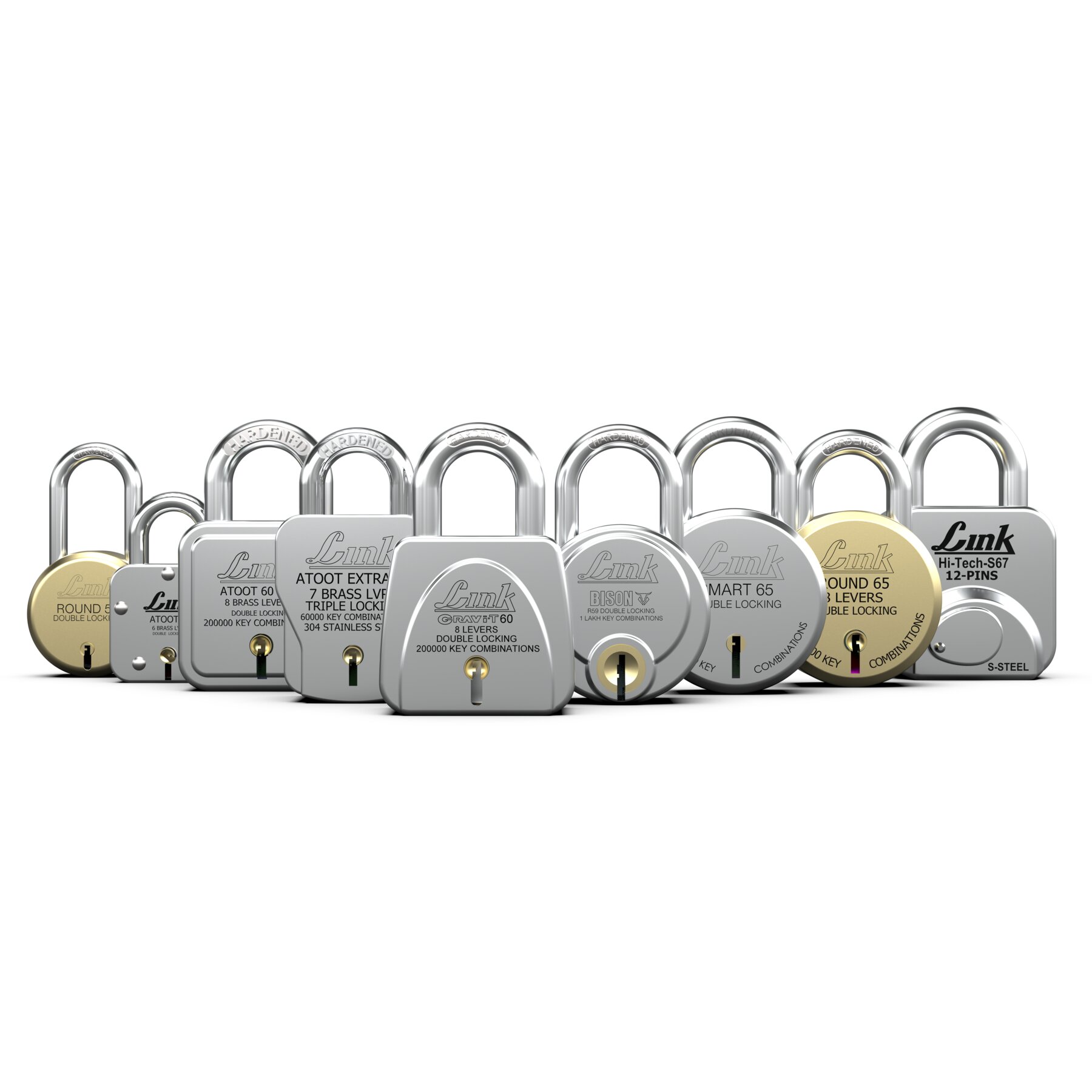
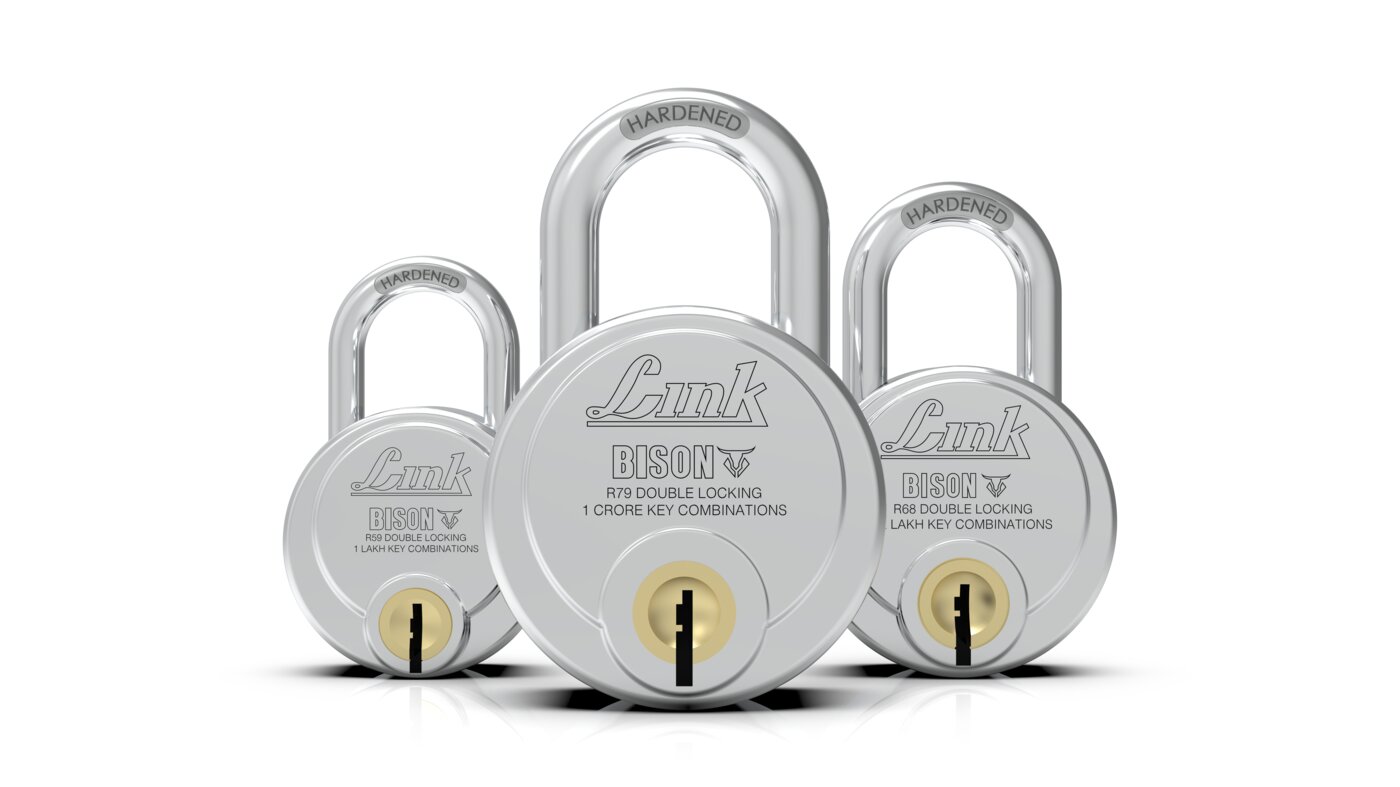
Round bodies, square bodies, brass and steel, six-figure key counts up to seven — the padlock line spans far beyond the two flagships below. Bison and Gravi-T are the two worth a closer look here: one built for maximum resistance, the other built to scale cleanly across duty classes.
The Link locking system — full range
02.1 — Range
Gravi-T, Scaled by Duty
Bodies
50 / 60 / 70 mm
Locking
Double, hardened shackle
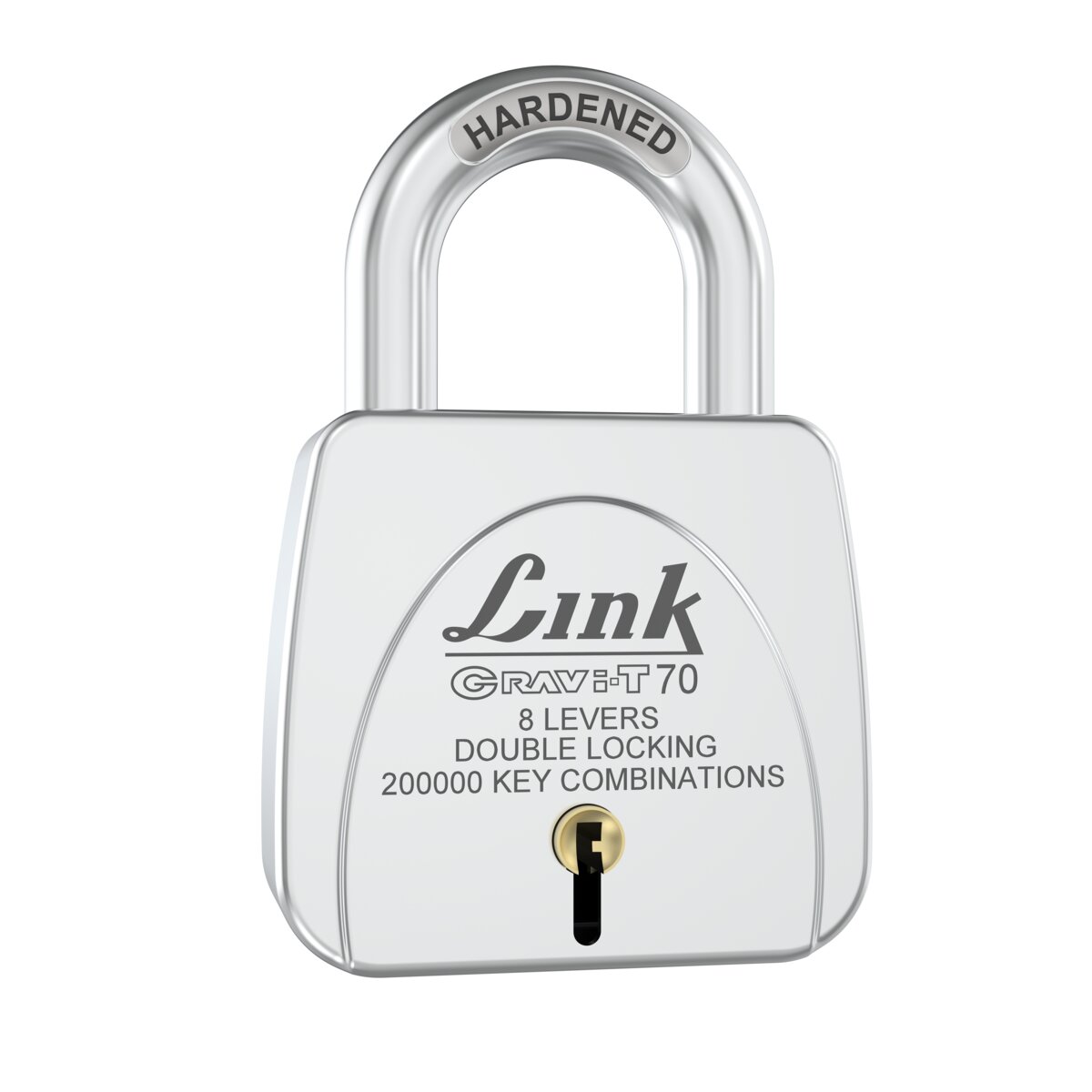
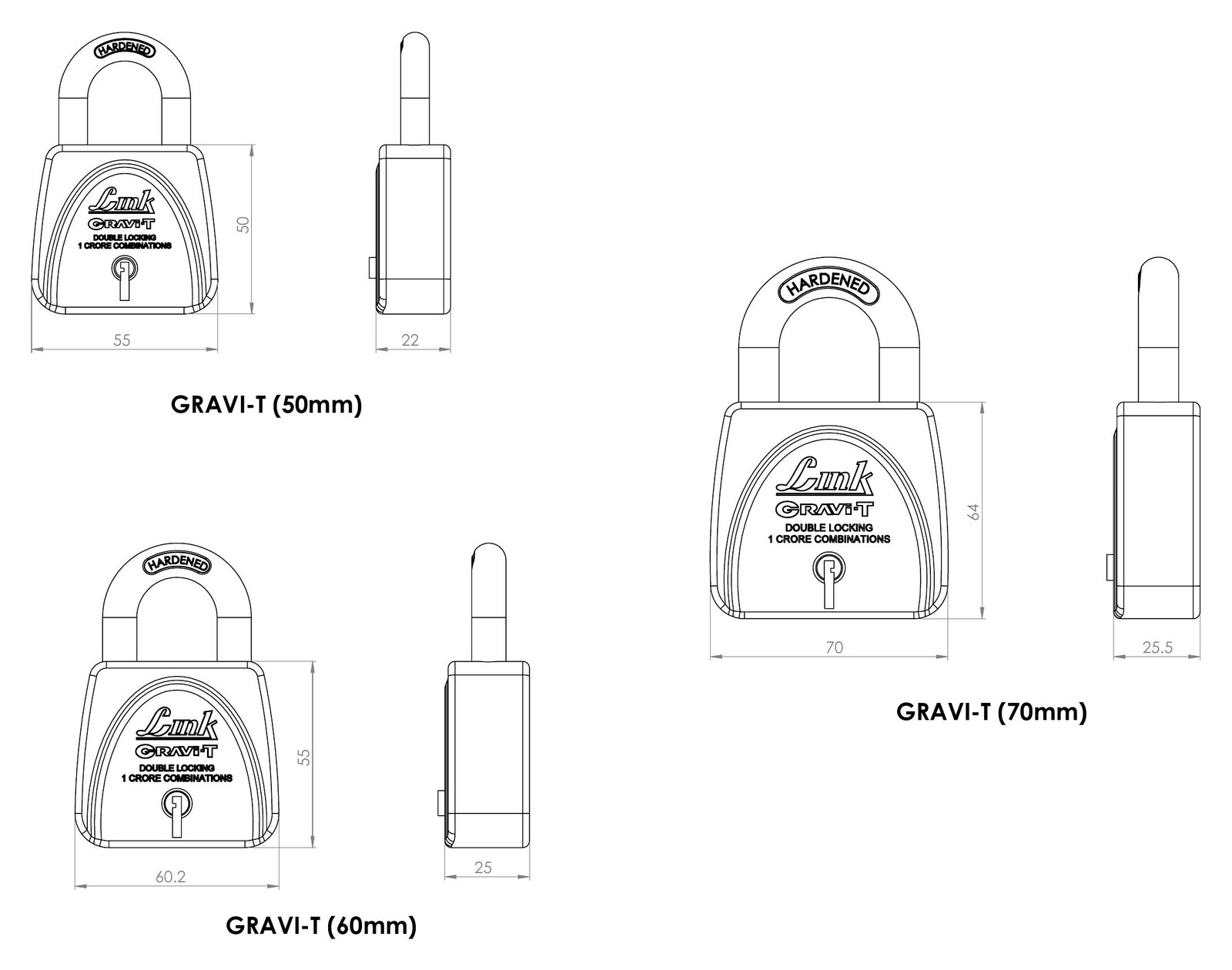
Gravi-T is one body, drawn at three scales — 50, 60 and 70 mm — so the same double-locking architecture stretches from a cabinet or gate latch up to a heavier shackle diameter for external use, without a separate design for each duty class.
Gravi-T 70 — rendered product shot50 / 60 / 70 mm body family, as drawn
02.2 — Strength & Security
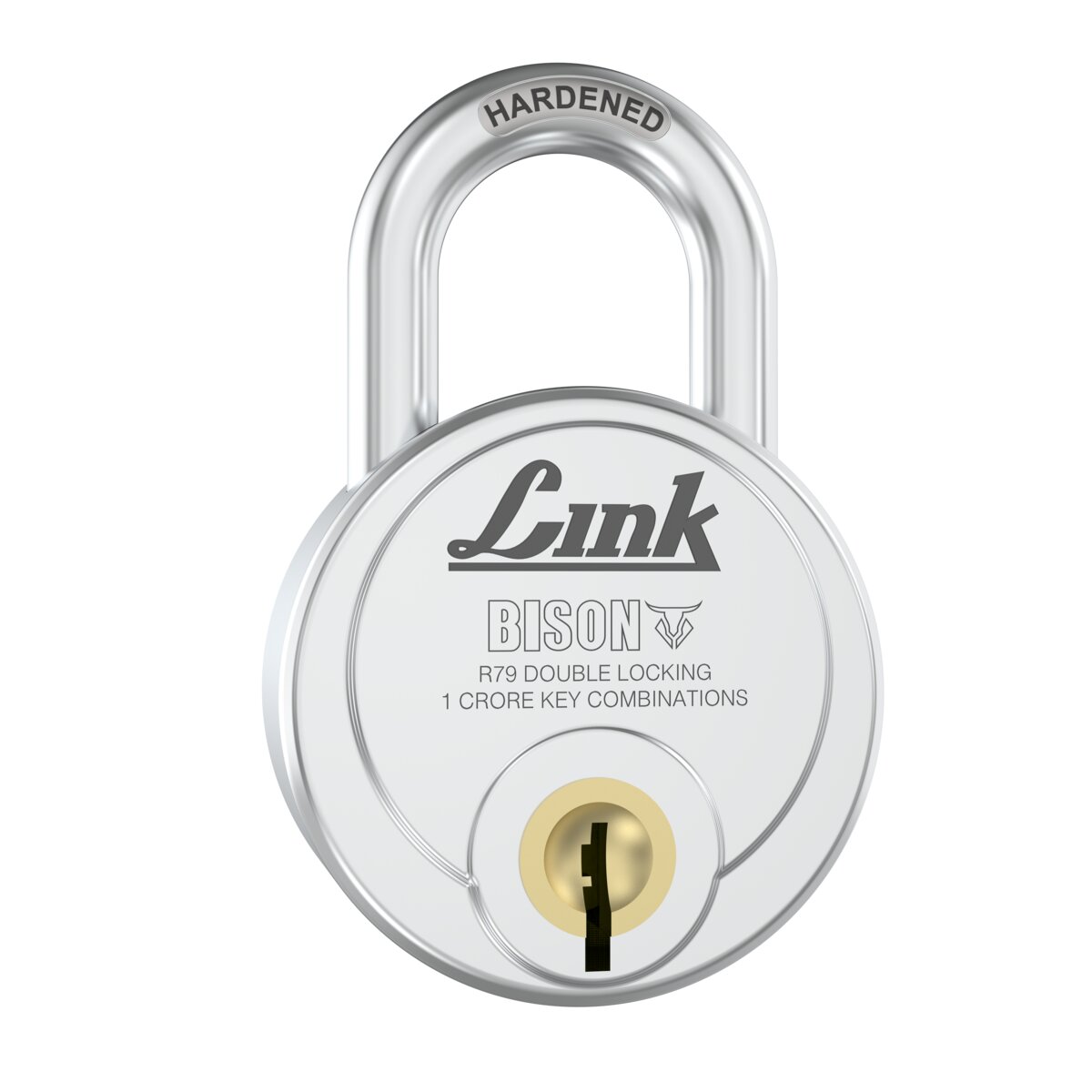
Bison Ø79
Body
Ø79 mm
Shackle clearance
33 mm
Combinations
1 crore
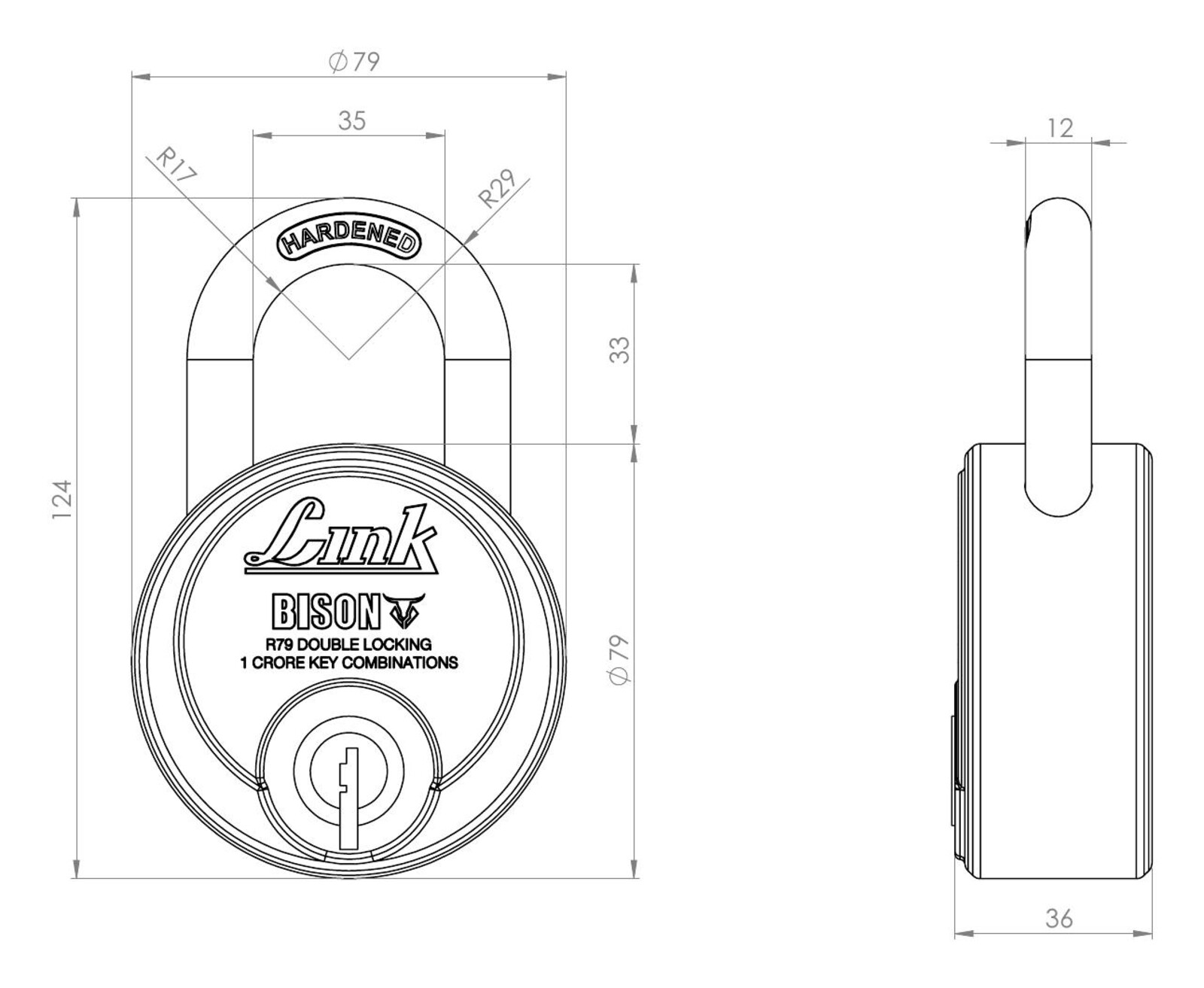
Bison is the flagship body — a Ø79 mm disc lock with a hardened shackle that engages at both legs. Every number on the drawing below is doing security work, not just fitting the geometry together.
The shackle arch is called out "HARDENED" directly on the drawing — a harder steel at the point most exposed to a bolt cutter or hacksaw.
02 — Pry resistance
Double Locking
The shackle locks at both the heel and the toe (R17 / R29), and sits with only 33 mm of clearance inside a Ø79 body — too tight to get a bar in and twist.
03 — Pick resistance
1 Crore Combinations
Ten million key combinations across the disc-detainer core, printed on the face as plainly as the brand mark itself.
Close
One Design Language, Two Jobs
A lever handle and a padlock ask for opposite things — one wants to disappear into the hand, the other wants to visibly refuse to be defeated — but both came off the same drawing discipline: one plate, one body, engineered once and finished many ways.