03 — Home Decor

Silverware, Stationery
& Gifting

Sculptural silverware for Episode Silver, playful lifestyle products for Scoobies, and a full corporate gifting & stationery practice built for Hitaishi KK.

Companies
Episode Silver, Scoobies, Hitaishi KK
Category
Home Decor & Corporate Gifting
Artifacts shown
34
Episode Silver

Sculptural Silverware

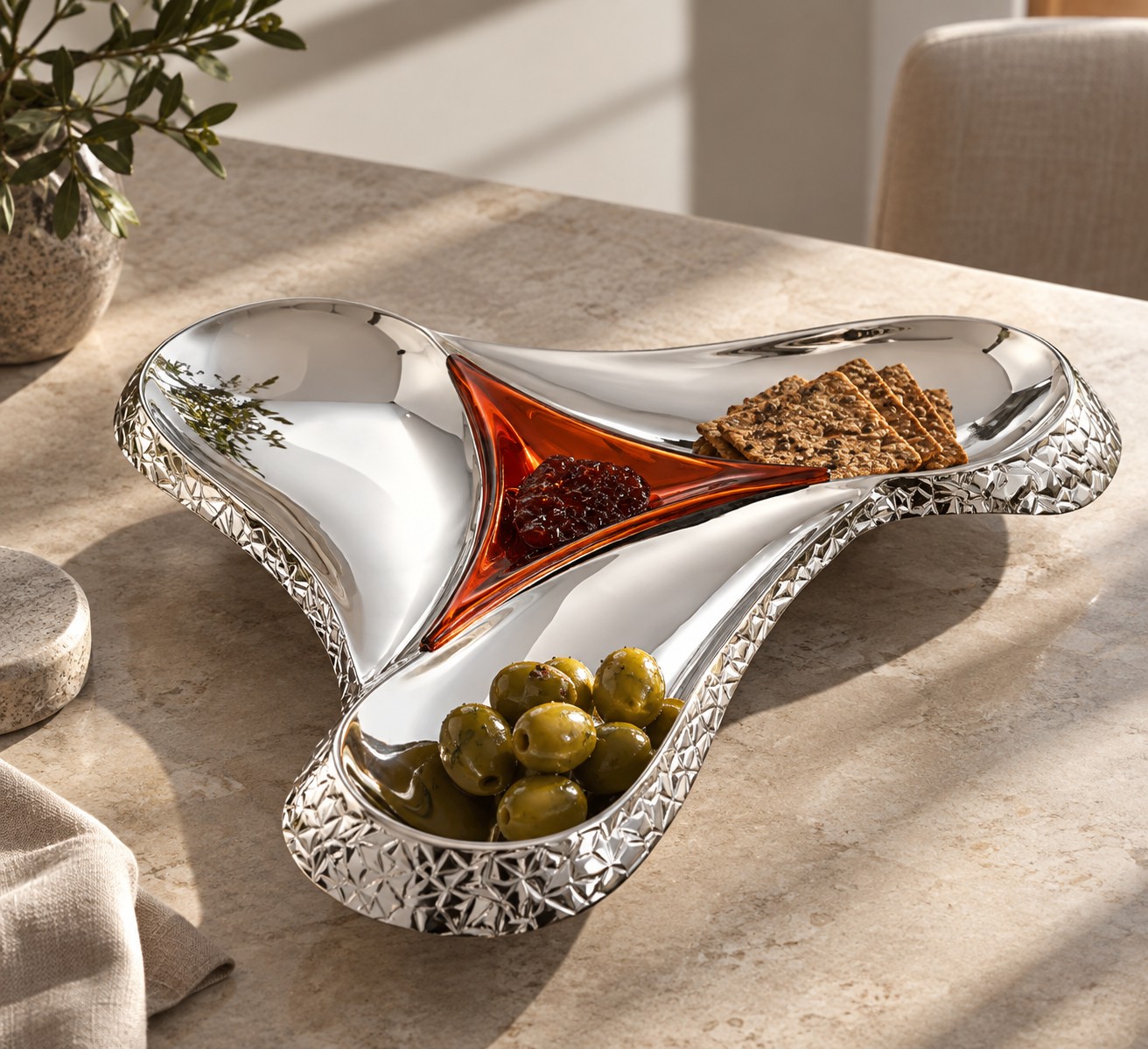
Three collections built around one material — mirror-polished stainless steel — pushed into vessels, bowls and light objects through cutout pattern, faceting and pure geometric form.

01

Vase Collection

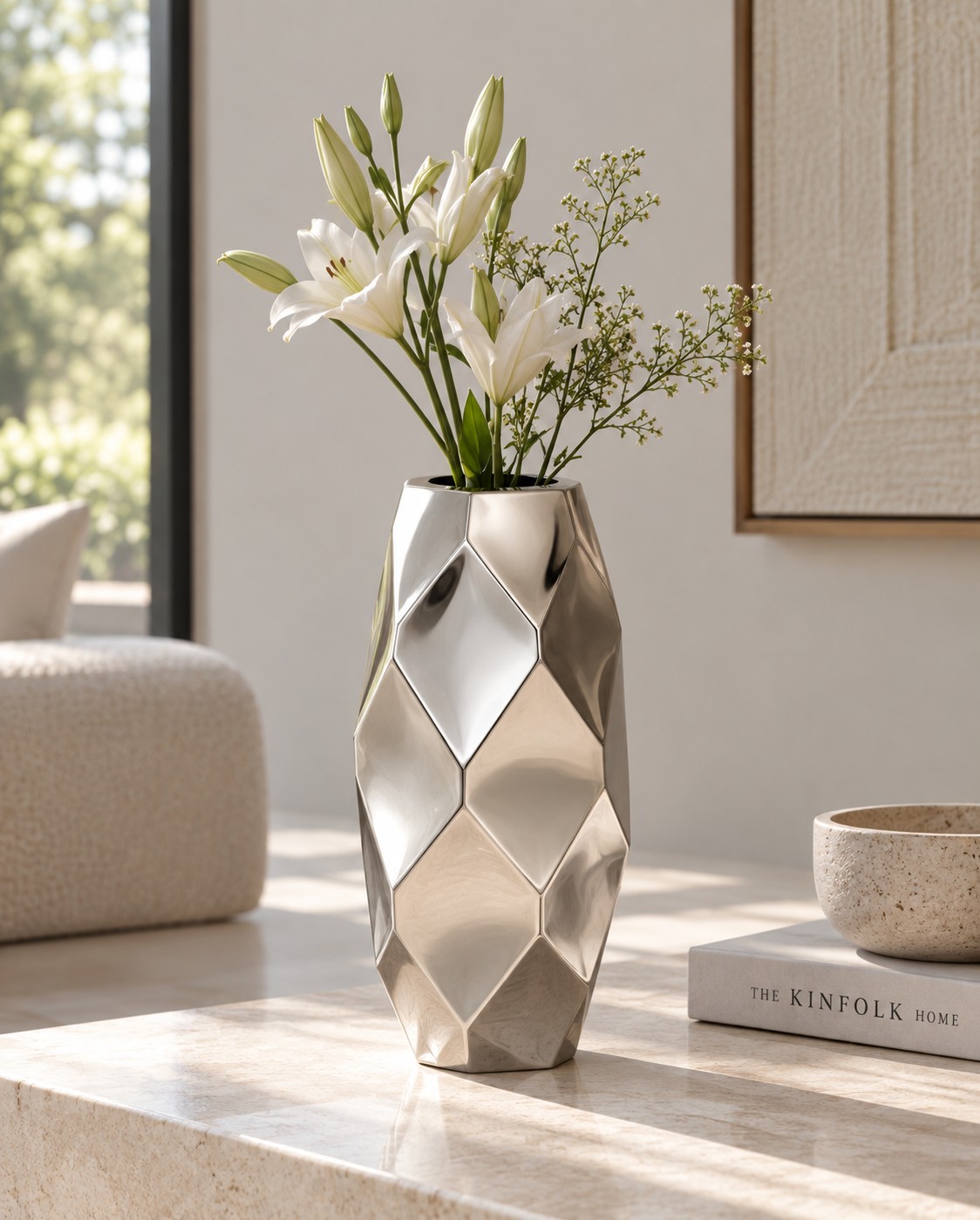
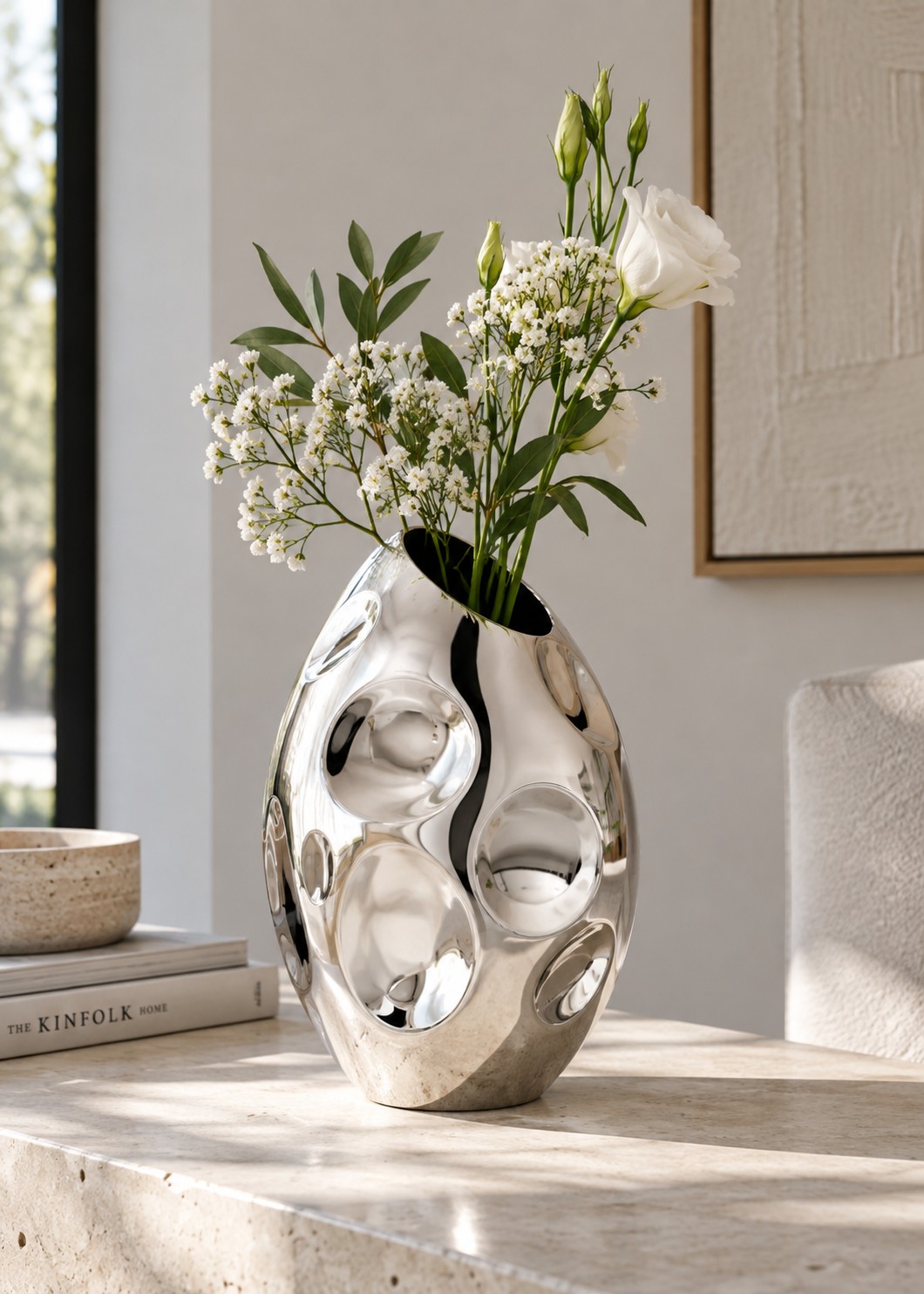
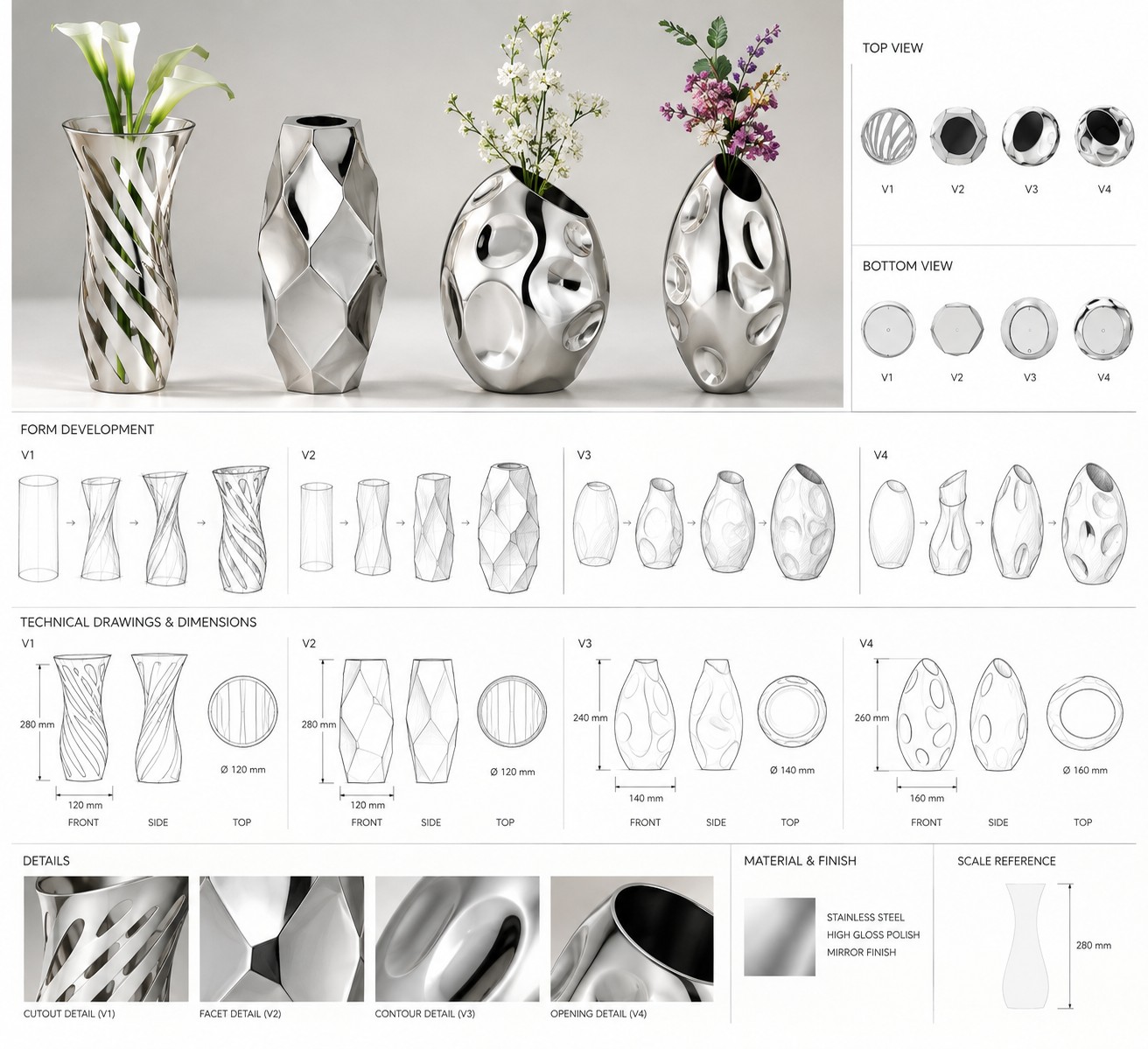
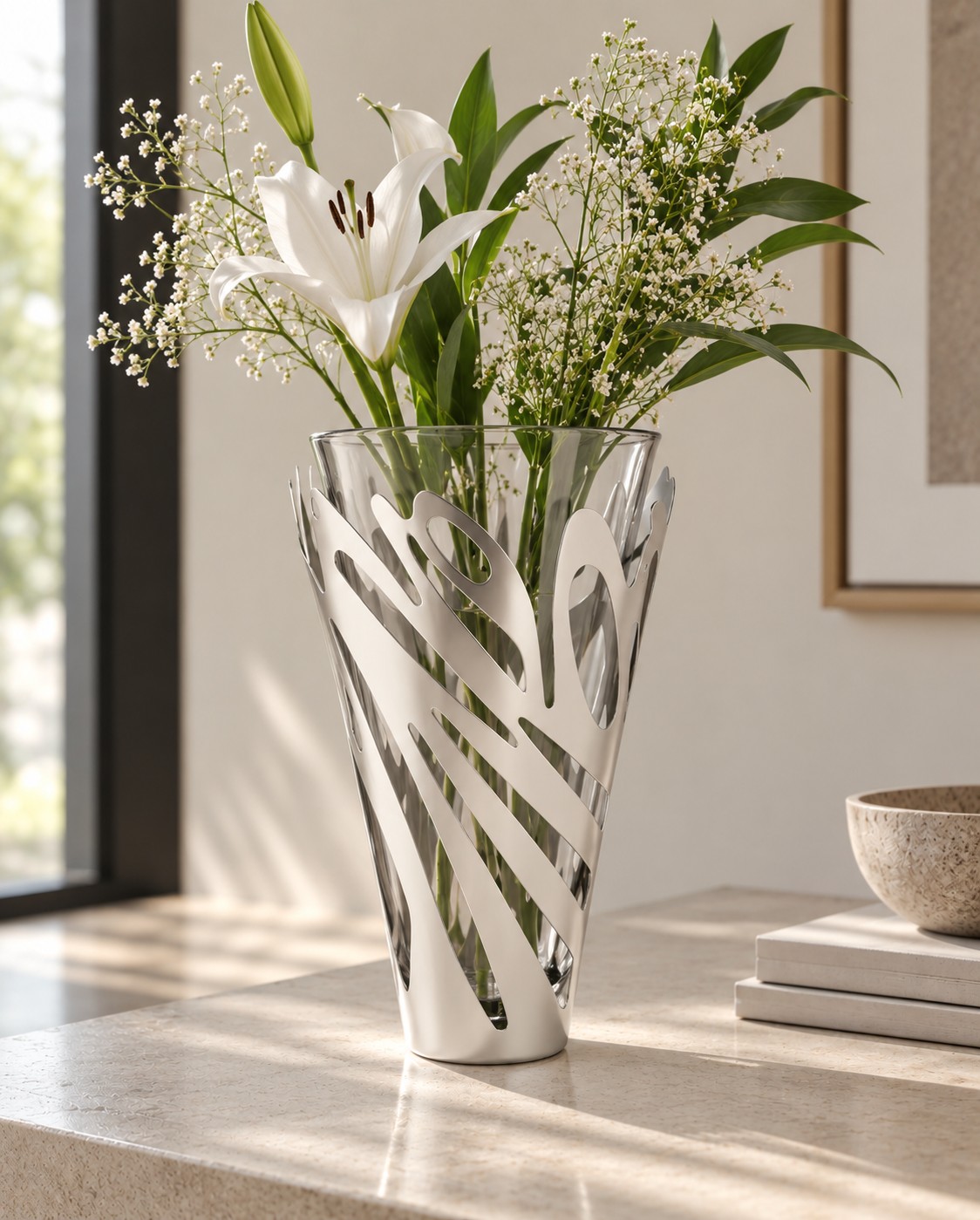
One form language — a cylinder, cut and faceted four ways — spun-cast in mirror-polish stainless steel: a spiral-cutout hourglass, a faceted diamond column, a perforated oval with irregular openings, and a tall pierced egg. Each variant runs 240–280mm tall on a shared production logic, so the family reads as one system rather than four unrelated vases.
02

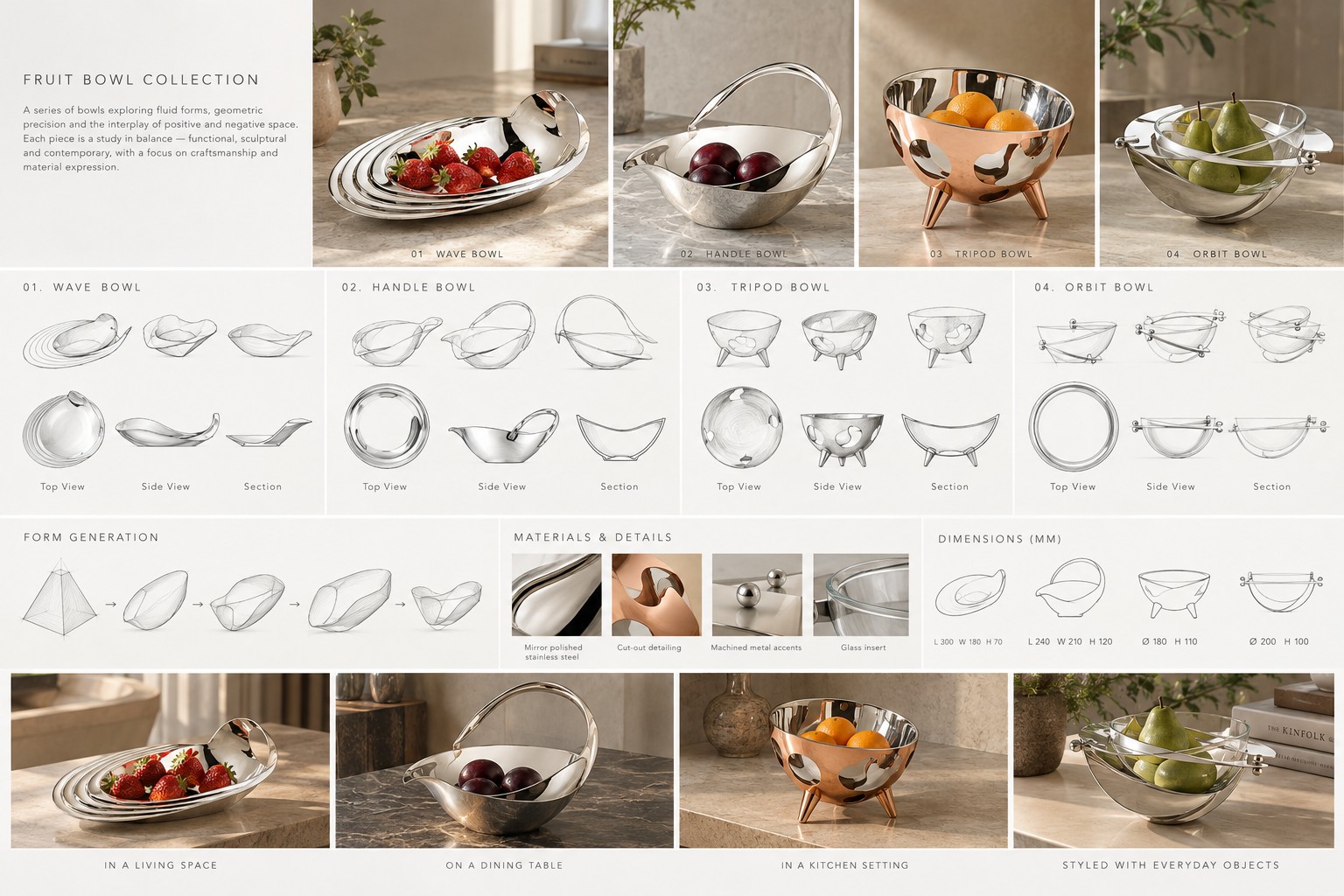
Fruit Bowl Collection

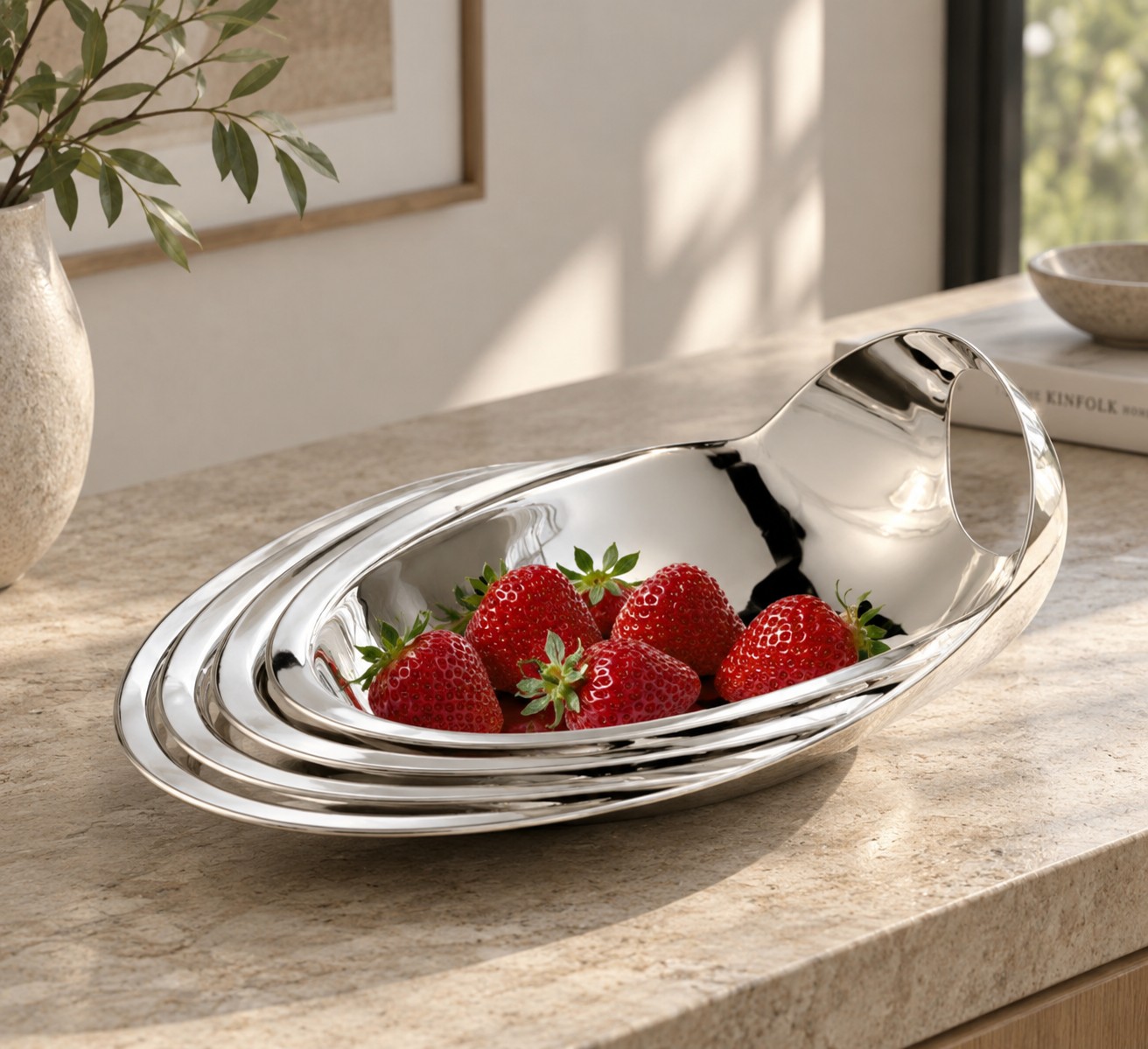
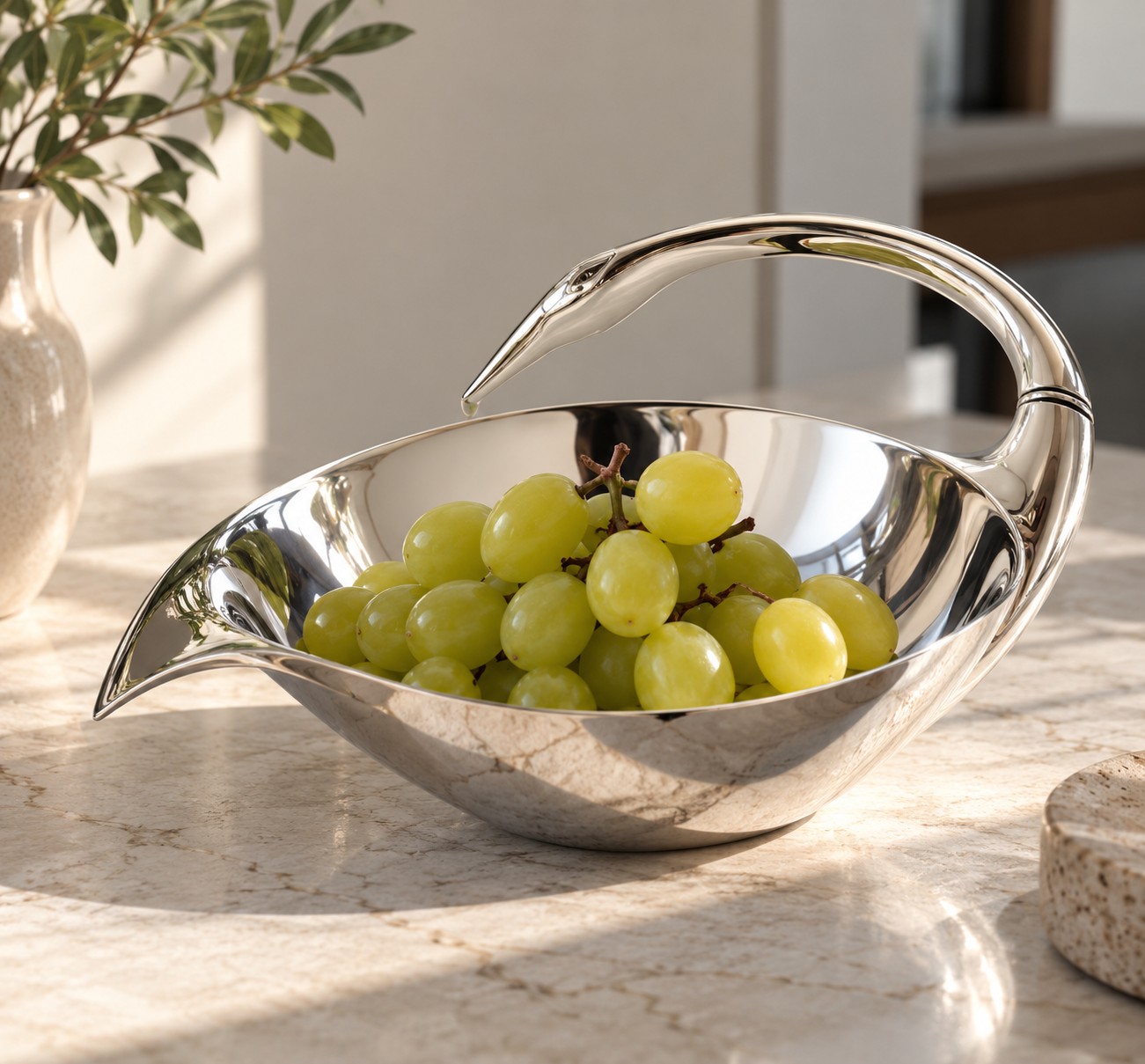
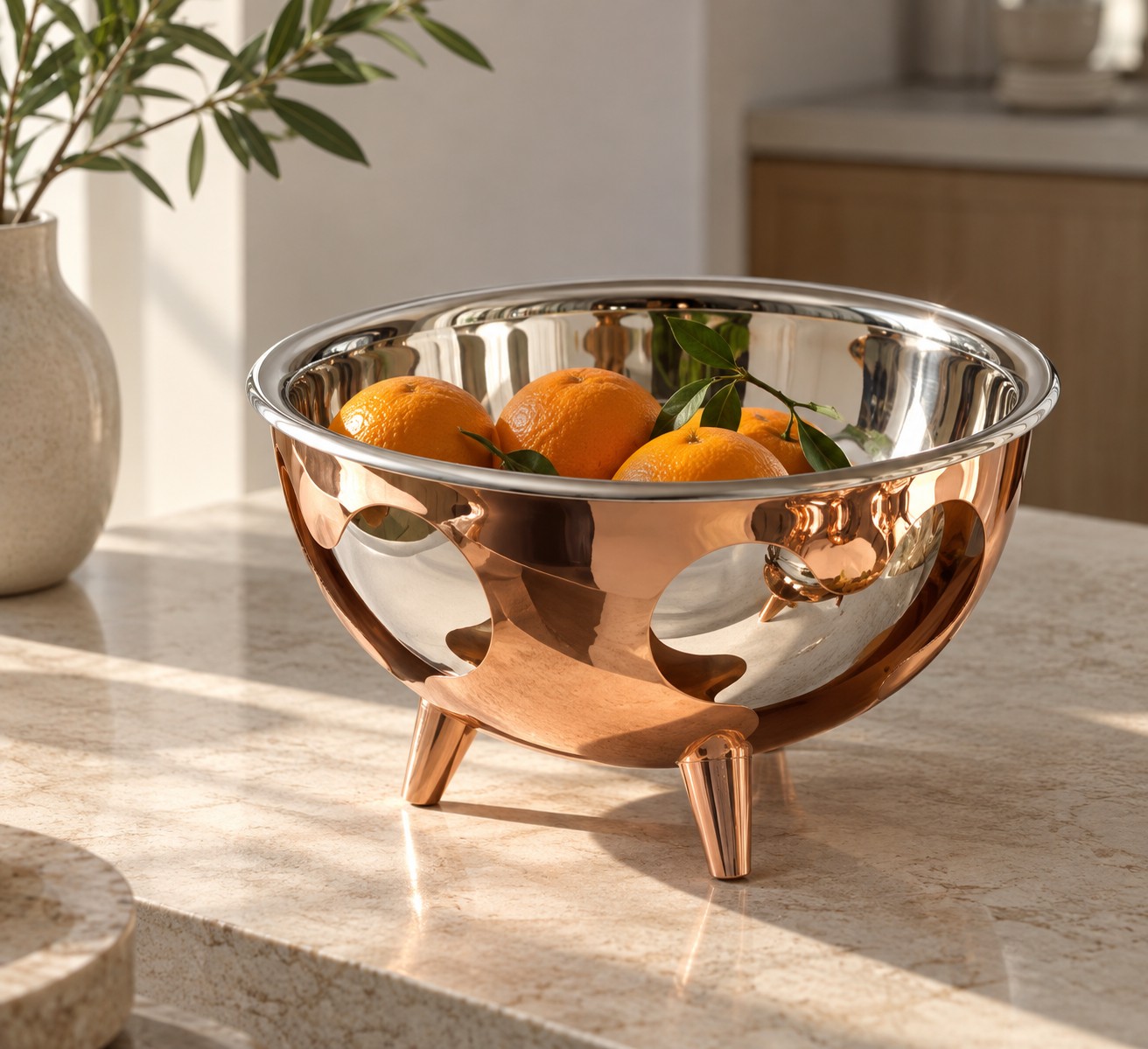
A series of bowls exploring fluid form, geometric precision and the interplay of positive and negative space — a stacking wave bowl, a swan-neck handle bowl, a copper tripod bowl raised on cutout legs, and an orbiting double-ring bowl. Each piece is a study in balance: functional, sculptural and material-led.

03

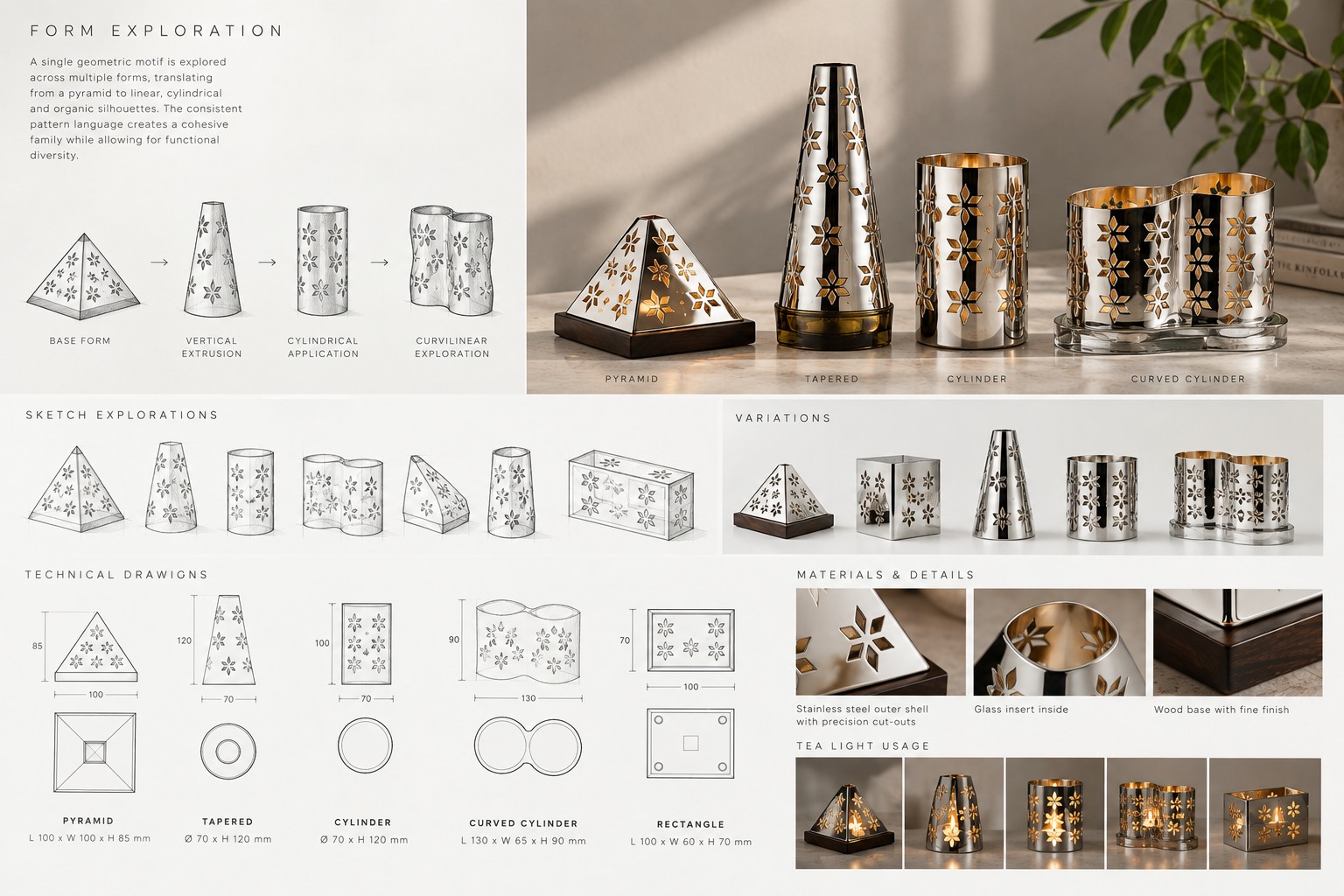
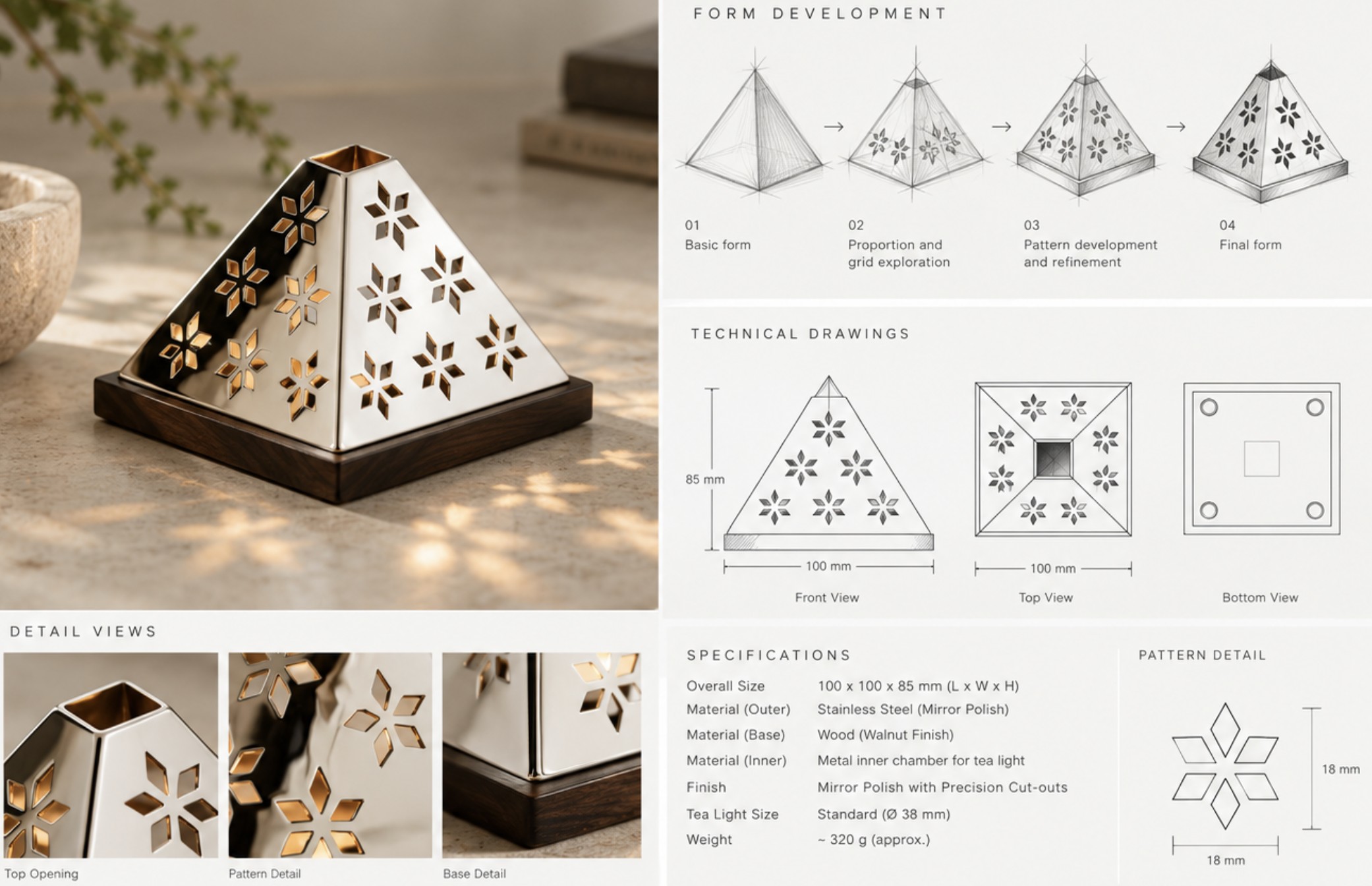
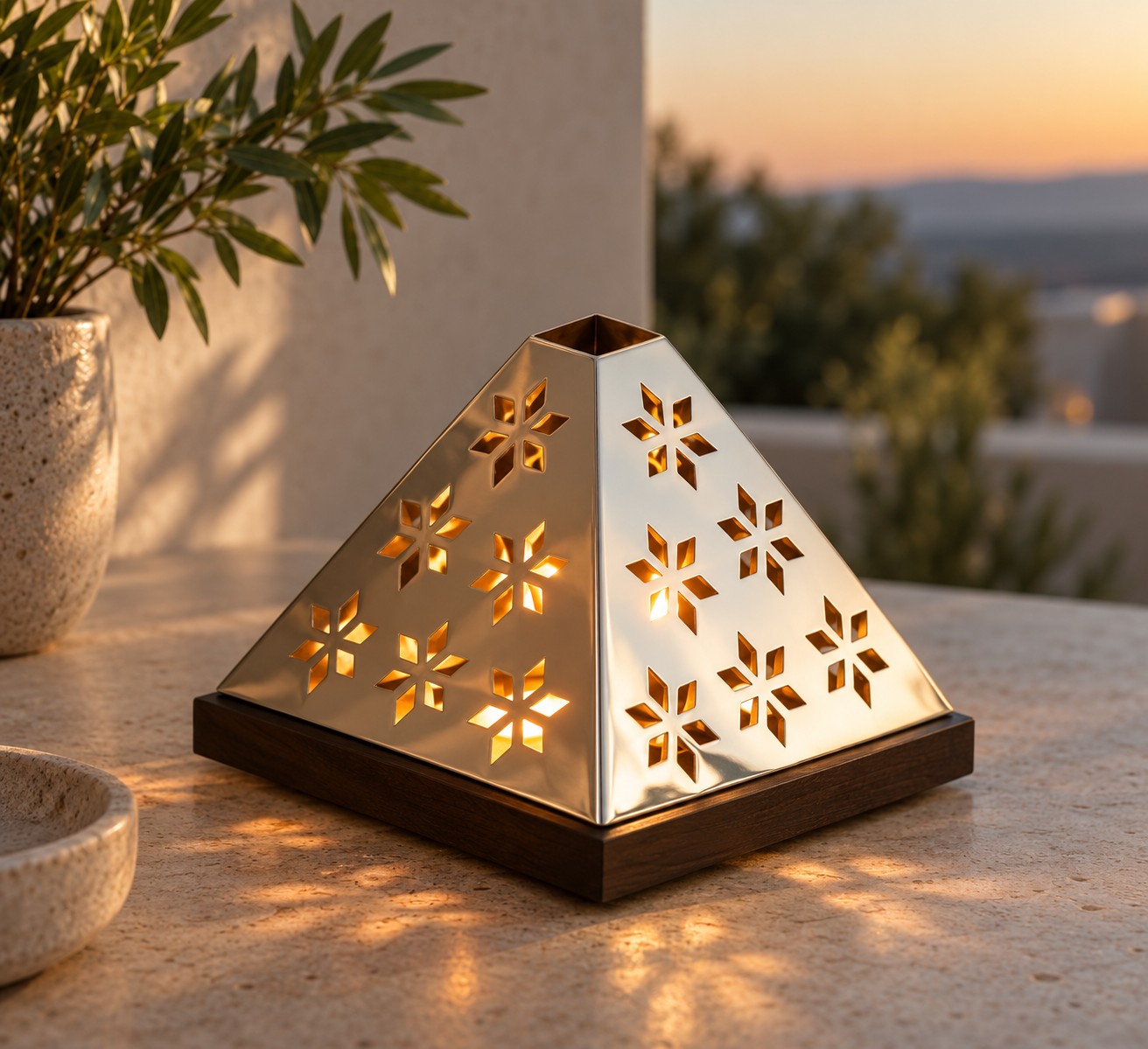
Tea Light Candle Collection — Illumine

A single geometric motif — a star-shaped cutout — explored across five forms: pyramid, tapered cone, cylinder, curved twin-cylinder and rectangle, each with a stainless-steel outer shell, a walnut-finish base and a glass insert to hold the tea light safely. While black and neutral tones are the classic expression of luxury, the curved and faceted reflecting surfaces here are what give the object its vitality — the cut-outs glow gold against the mirror finish once lit.

Scoobies

Kids' Lifestyle Products

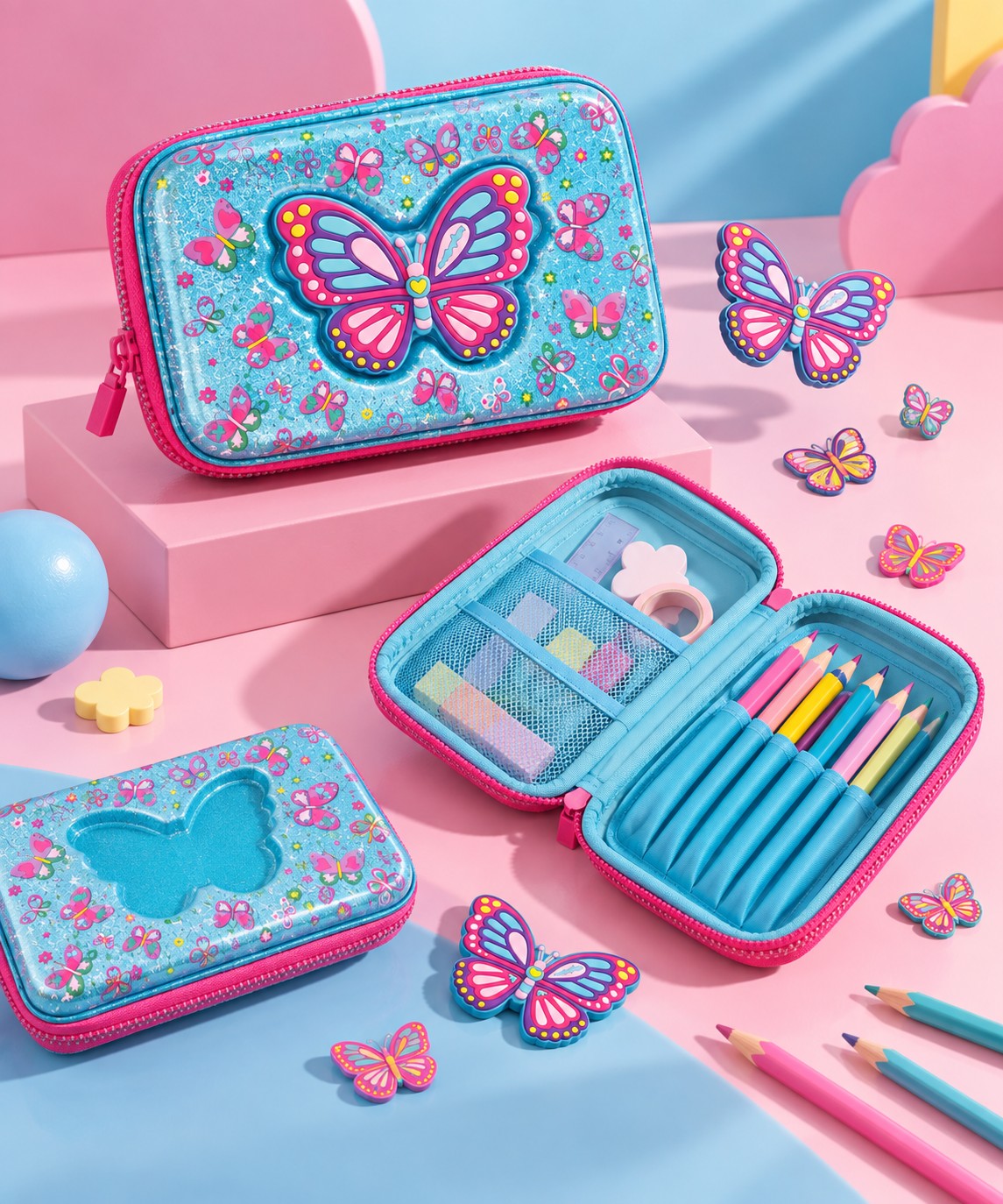
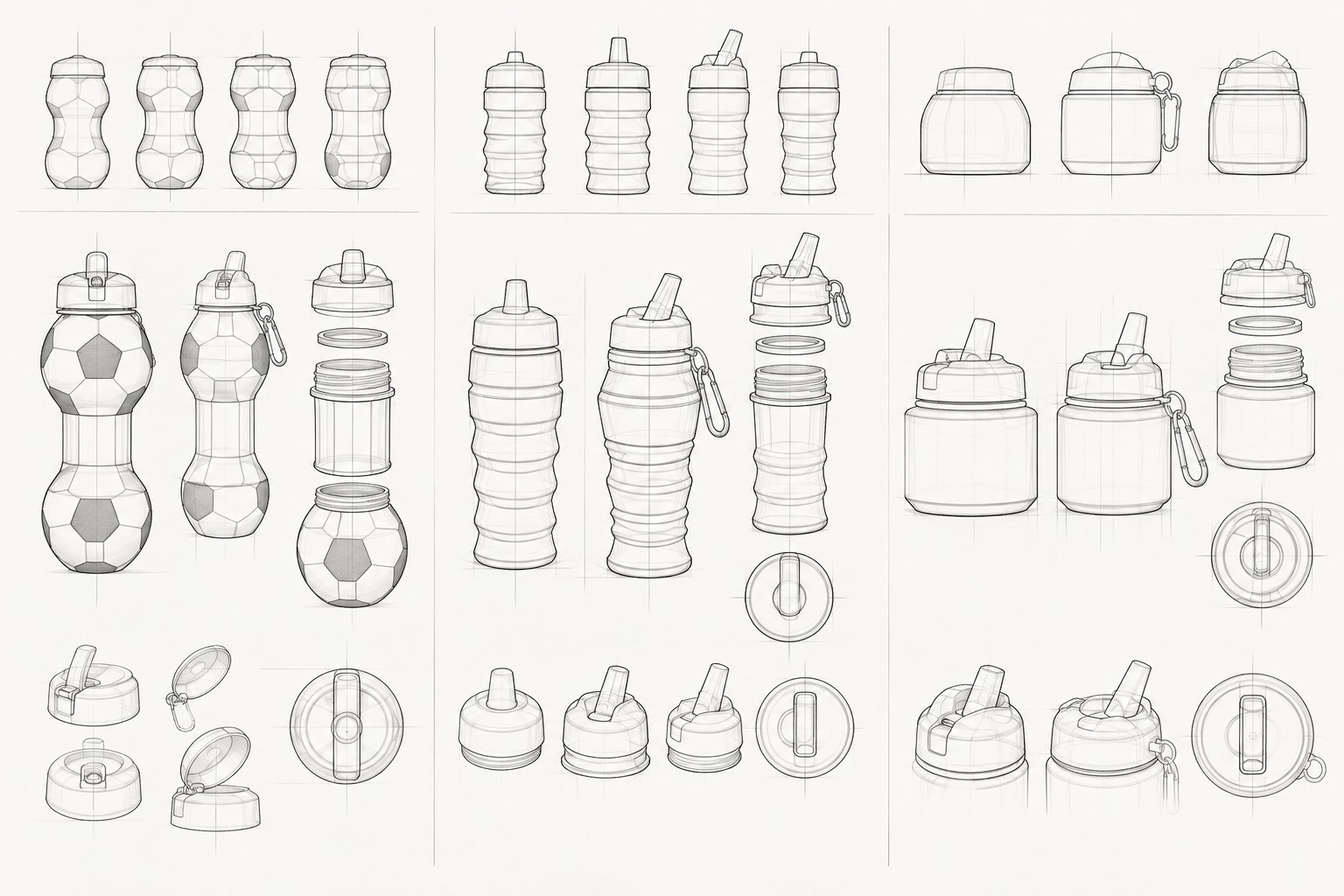
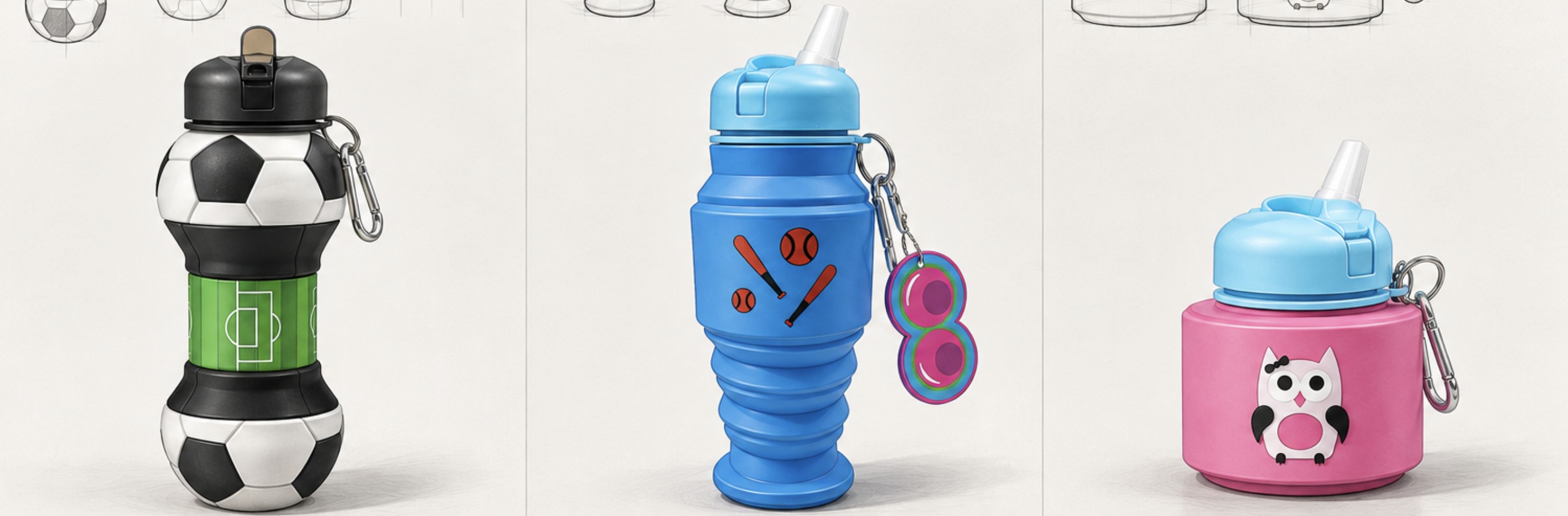
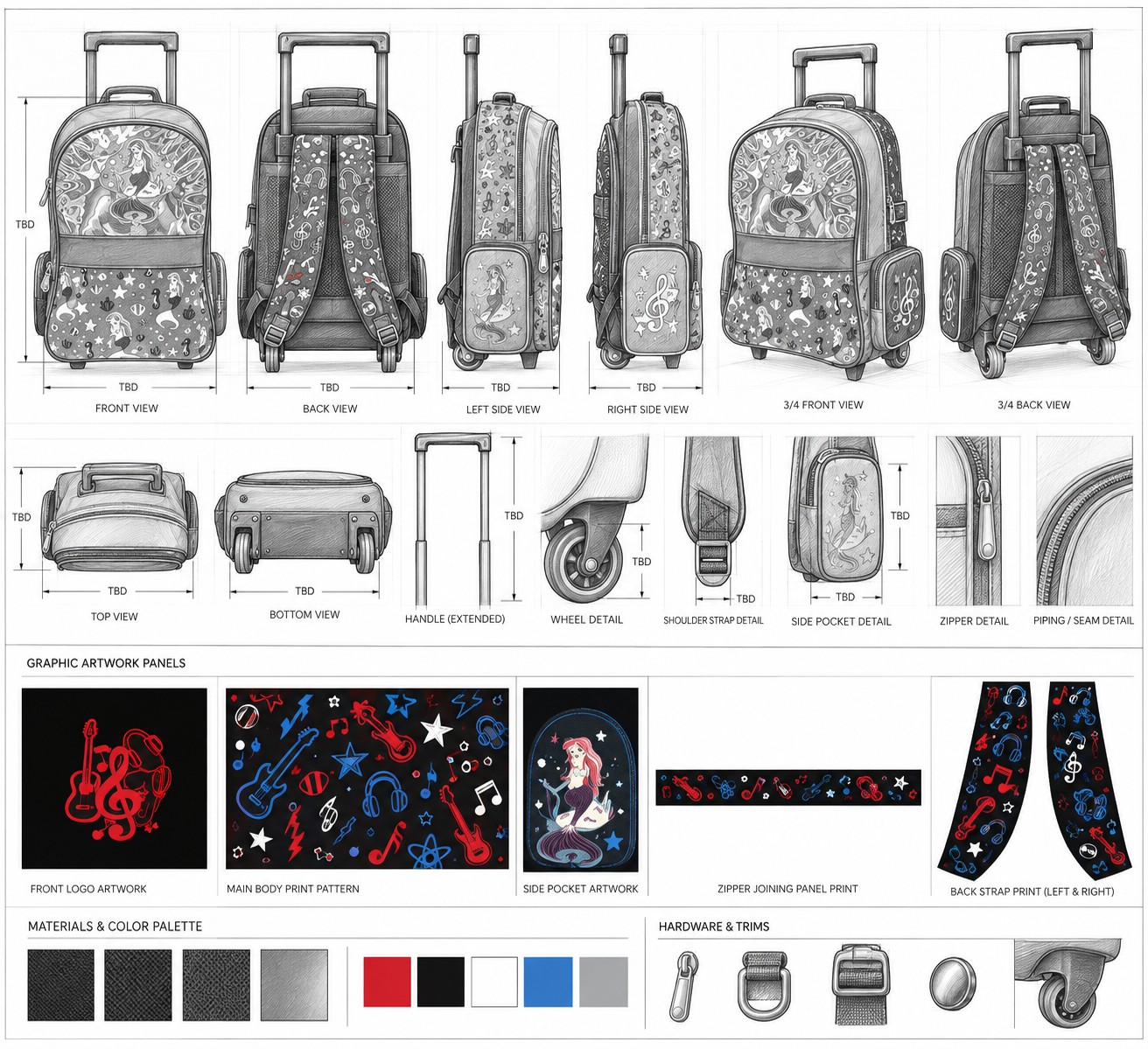
Three everyday-carry objects for kids, each built as a small piece of play — a stationery case shaped like a butterfly, a set of collapsible bottles styled around a hobby or character, and a rolling trolley bag with a holographic or hand-drawn print.

01

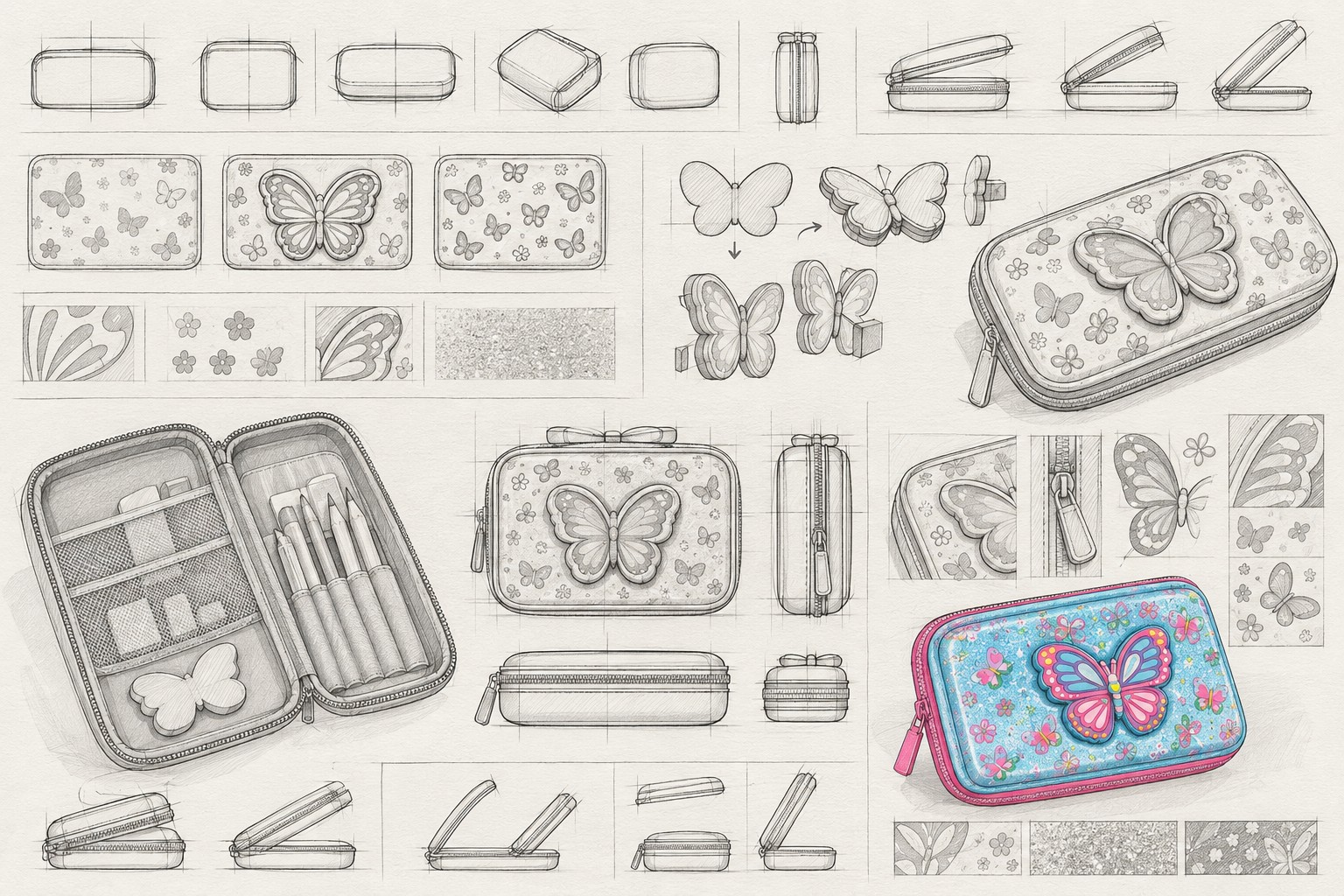
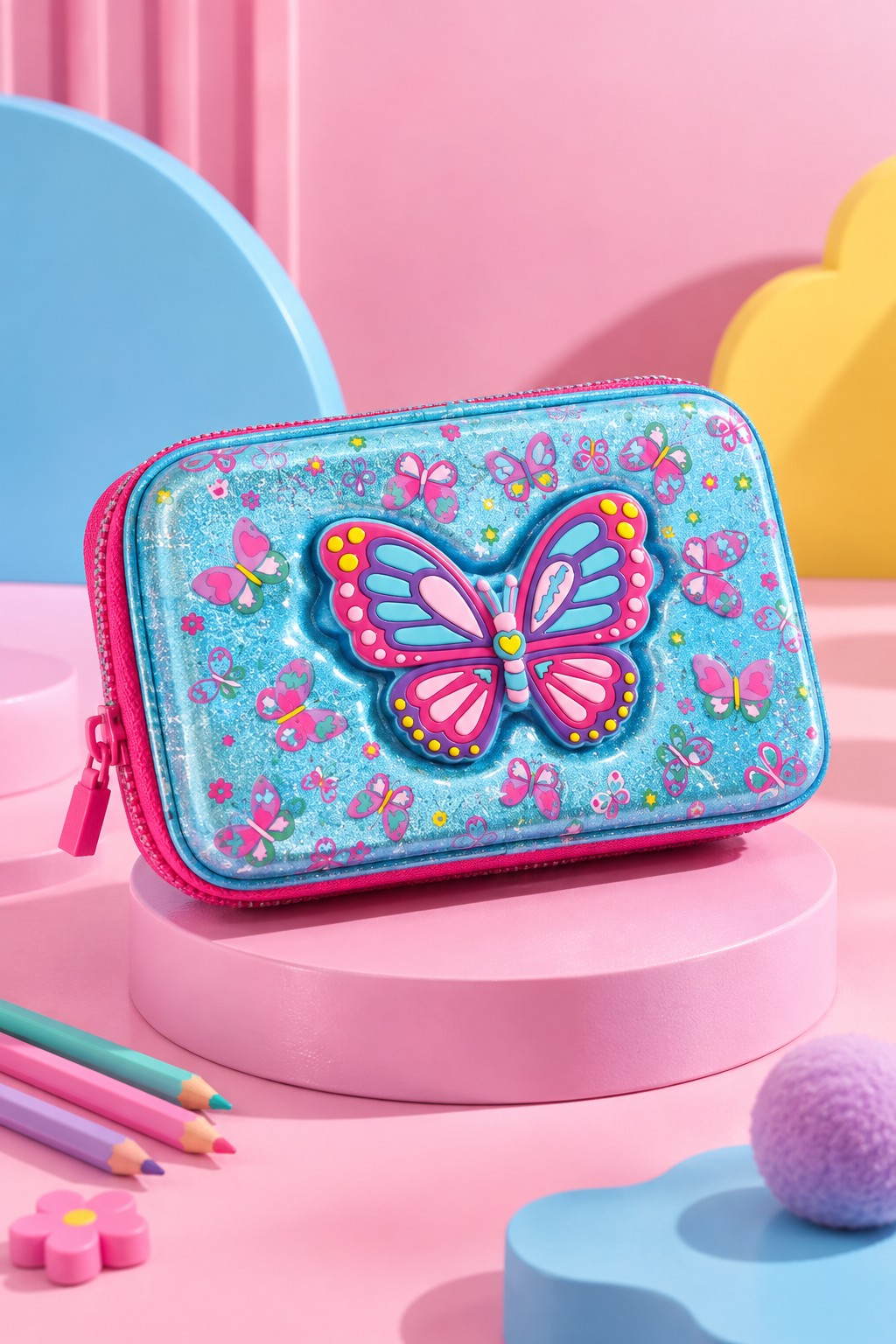
The Lunch Box

A hard-shell stationery case moulded into a glittered, dimensional butterfly, holding a full kit of pencils, an eraser set, a ruler and a sharpener along its interior — soft pink and blue interior colourways designed to be as much a toy as a tool.

02

The Bottles

Collapsible silicone bottles that fold flat when empty, each styled around a small character or hobby — a football, a baseball kit and an owl — with a matching carabiner clip and charm.

03

The Bag

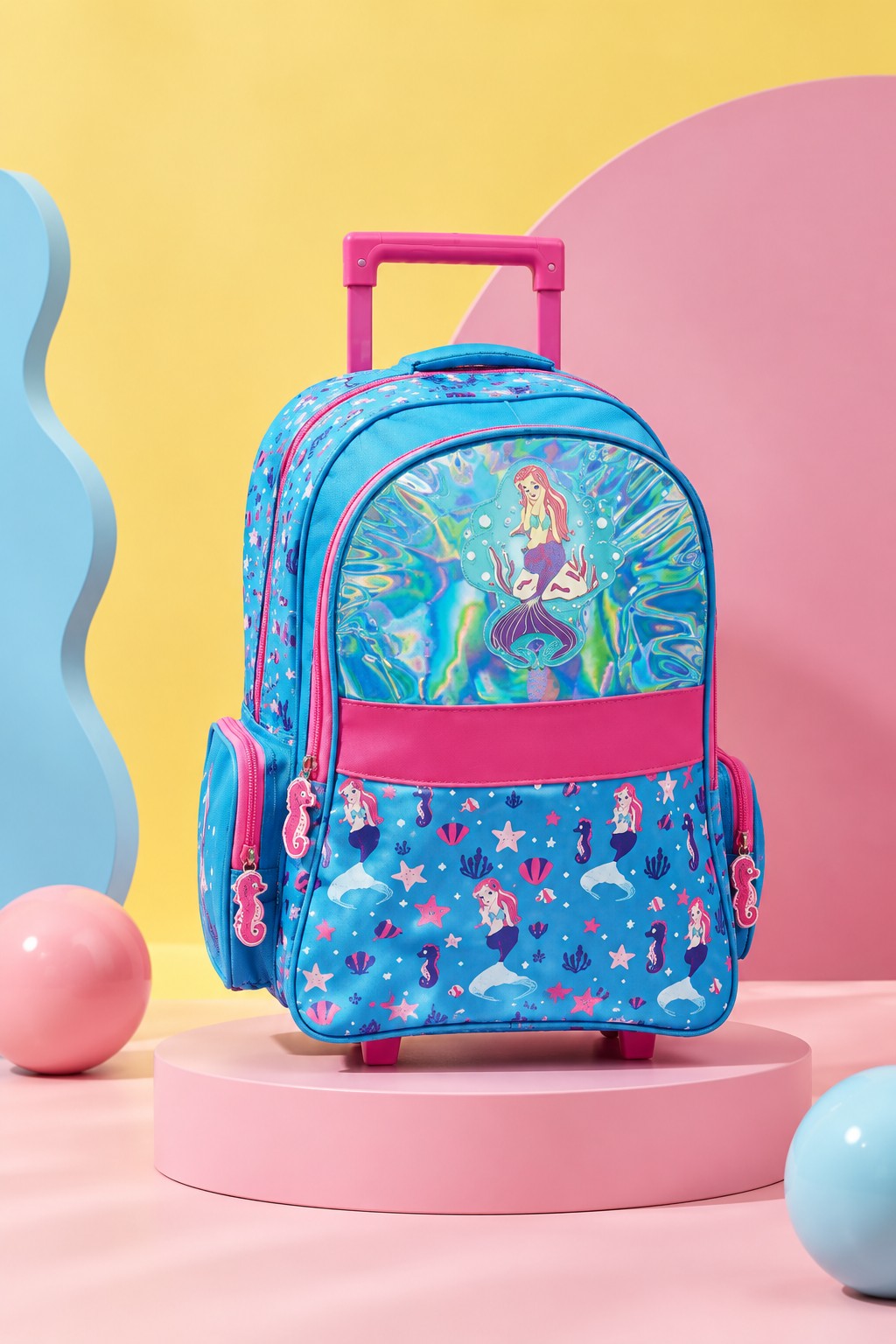
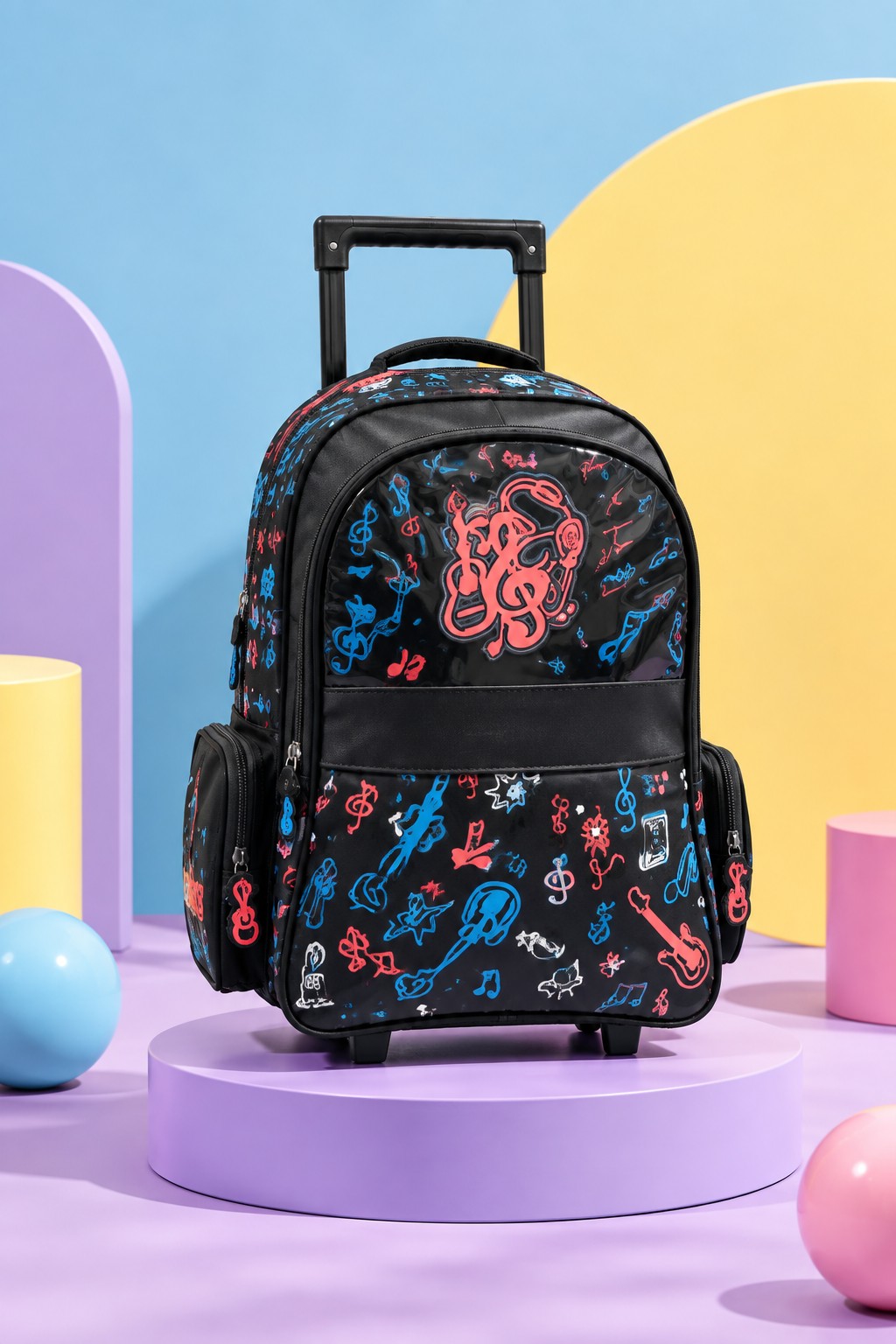
A rolling trolley backpack in two graphic directions — a holographic mermaid print with a sea-creature side pocket, and a hand-scrawled music/instrument print in red, white and blue on black — sharing the same telescoping handle, wheel base and dual side-pocket construction.

Hitaishi KK

Corporate Gifting
& Stationery

A product-led exploration of gifting objects, desktop tools and keepsakes for Hitaishi KK — developed through the lens of an accessory designer. A compact portfolio of corporate gifting and stationery ranges, where everyday utility becomes a tactile, collectible experience.

01 / Context

Designing Objects That Are Remembered

01

Read the occasion

Understand whether the object is meant to impress, organise, celebrate or be kept.

02

Build a visual language

Choose a material, finish, silhouette and detail system that can travel across products.

03

Resolve the touchpoints

Design the opening, grip, storage, movement and reveal — the small moments that make a gift feel considered.

04

Create a family

Extend the logic into complementary items so the range feels intentional rather than assorted.

The Brief
Create premium, giftable objects that feel personal and distinctive — while remaining coherent as a range.
The Design Lens
As an accessory designer, the focus shifts from designing isolated objects to designing a family of objects: shared proportions, material language, finish, and emotional cue.
Categories
Corporate gifting · Premium men's gifting · Desktop stationery · Games · Frames & mirrors
02 / Stationery

The Desk as a Personal Landscape

The stationery work turns ordinary tools into tactile desk companions. The thinking begins with the hand, the desk surface and the pleasure of keeping useful things around.

02.1

Building Collections, Not Isolated Tools

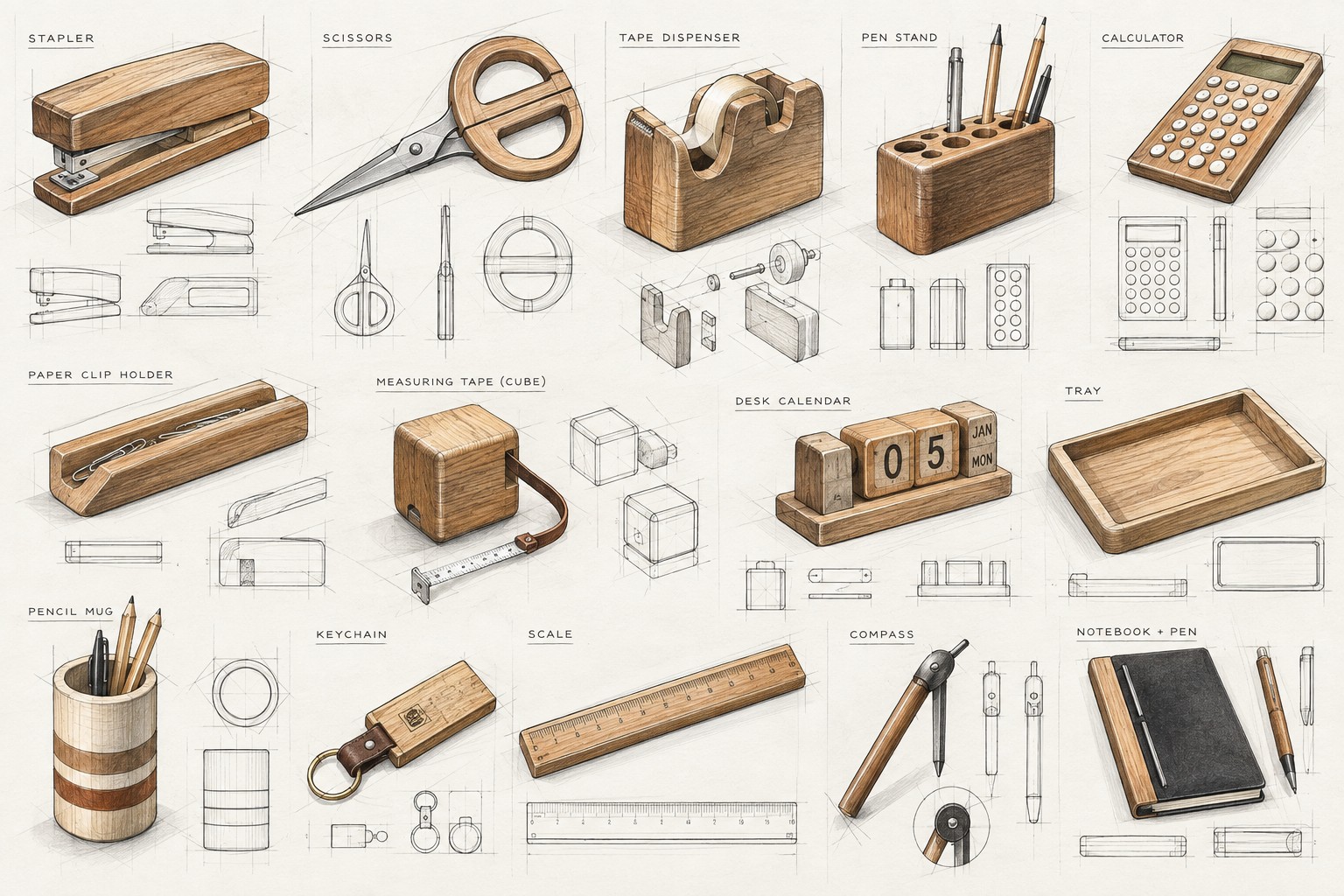
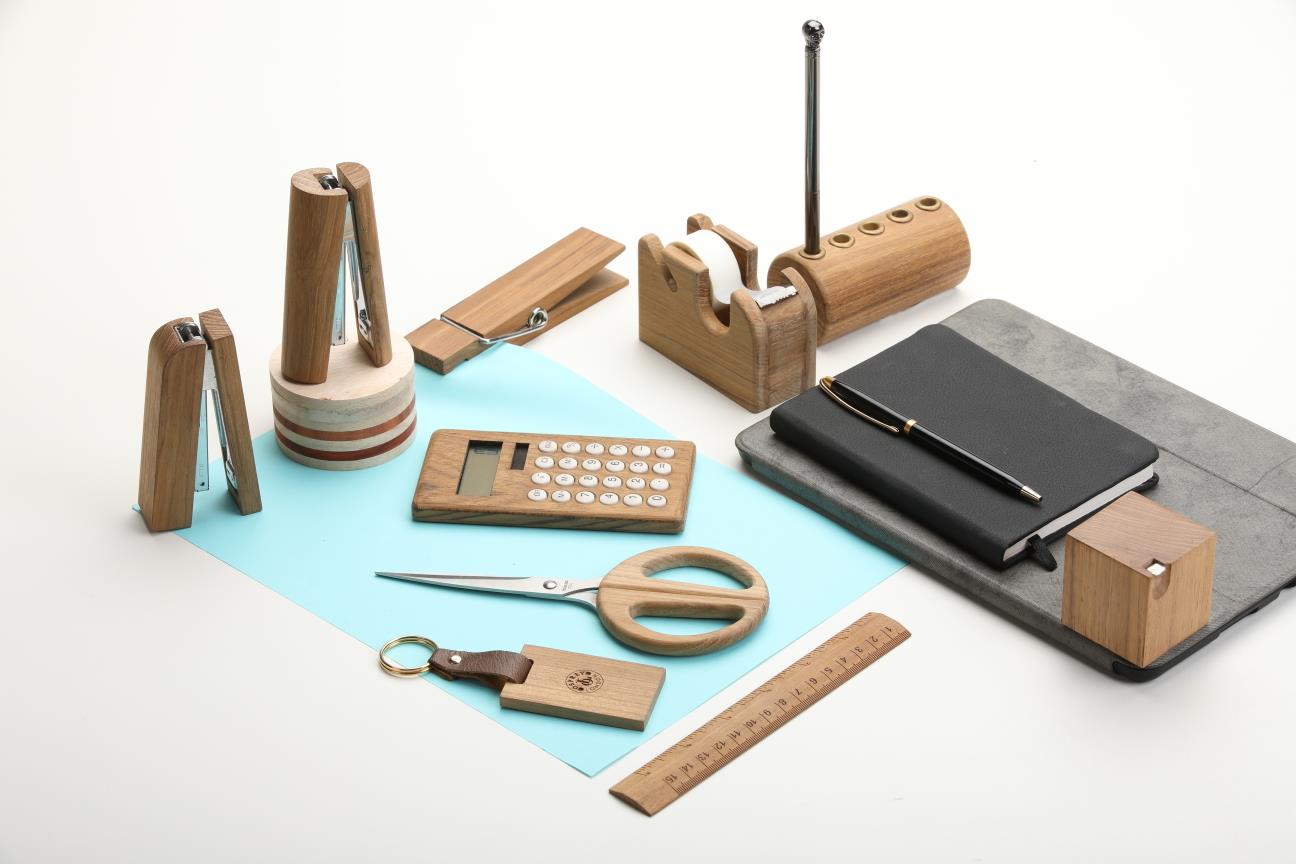
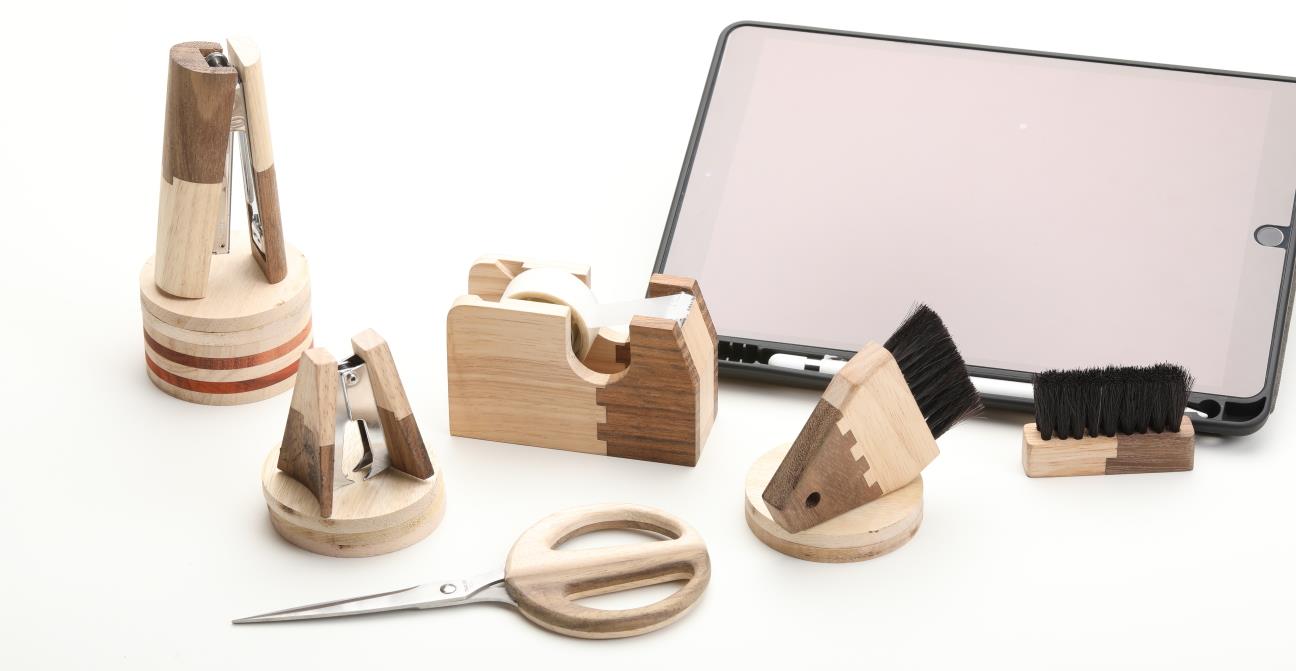
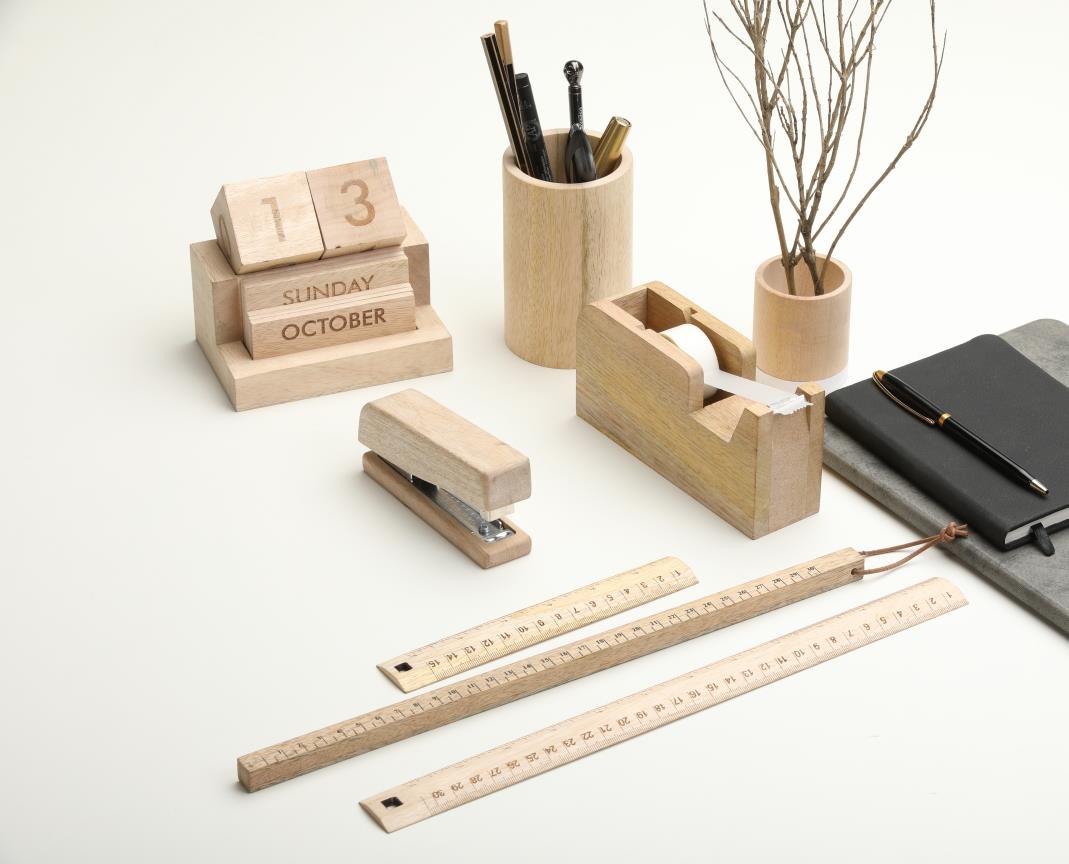
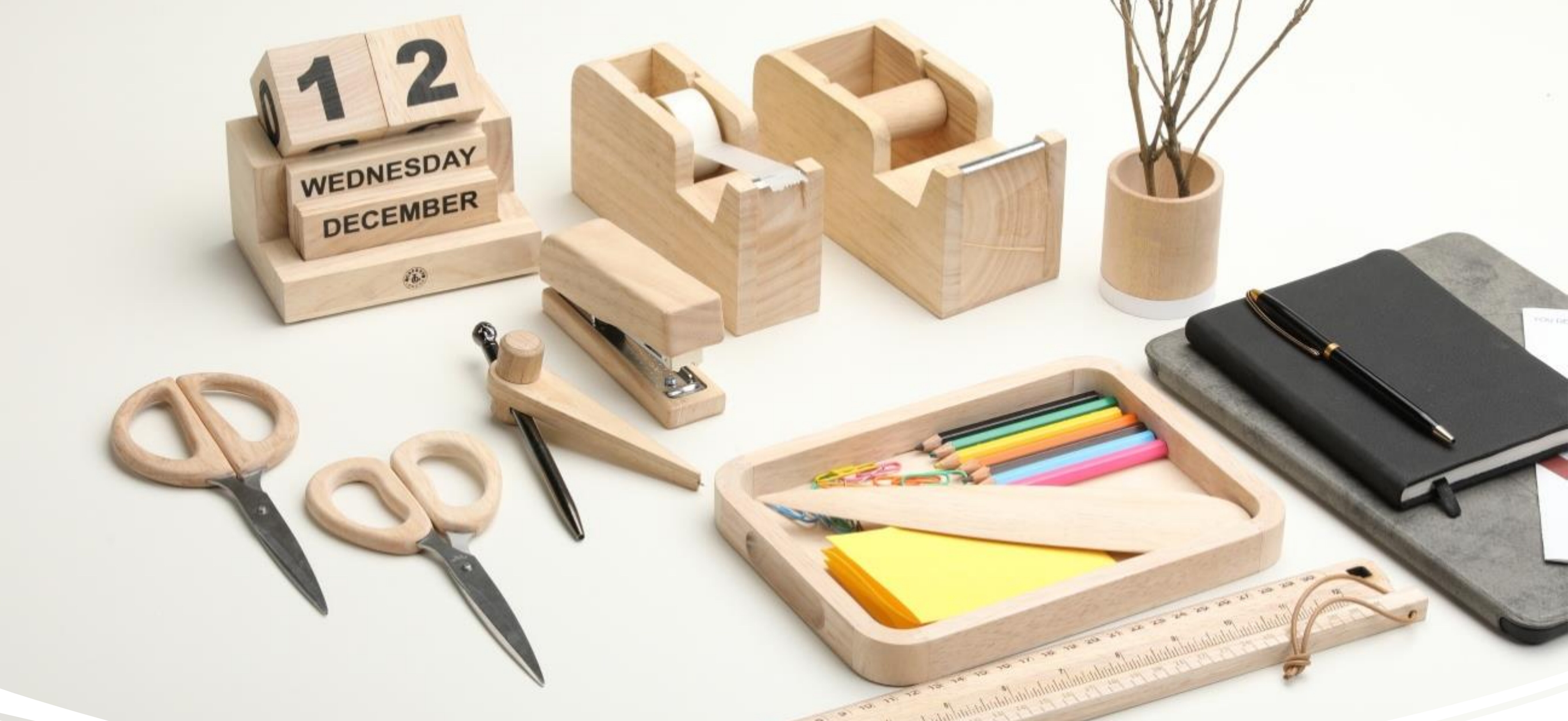
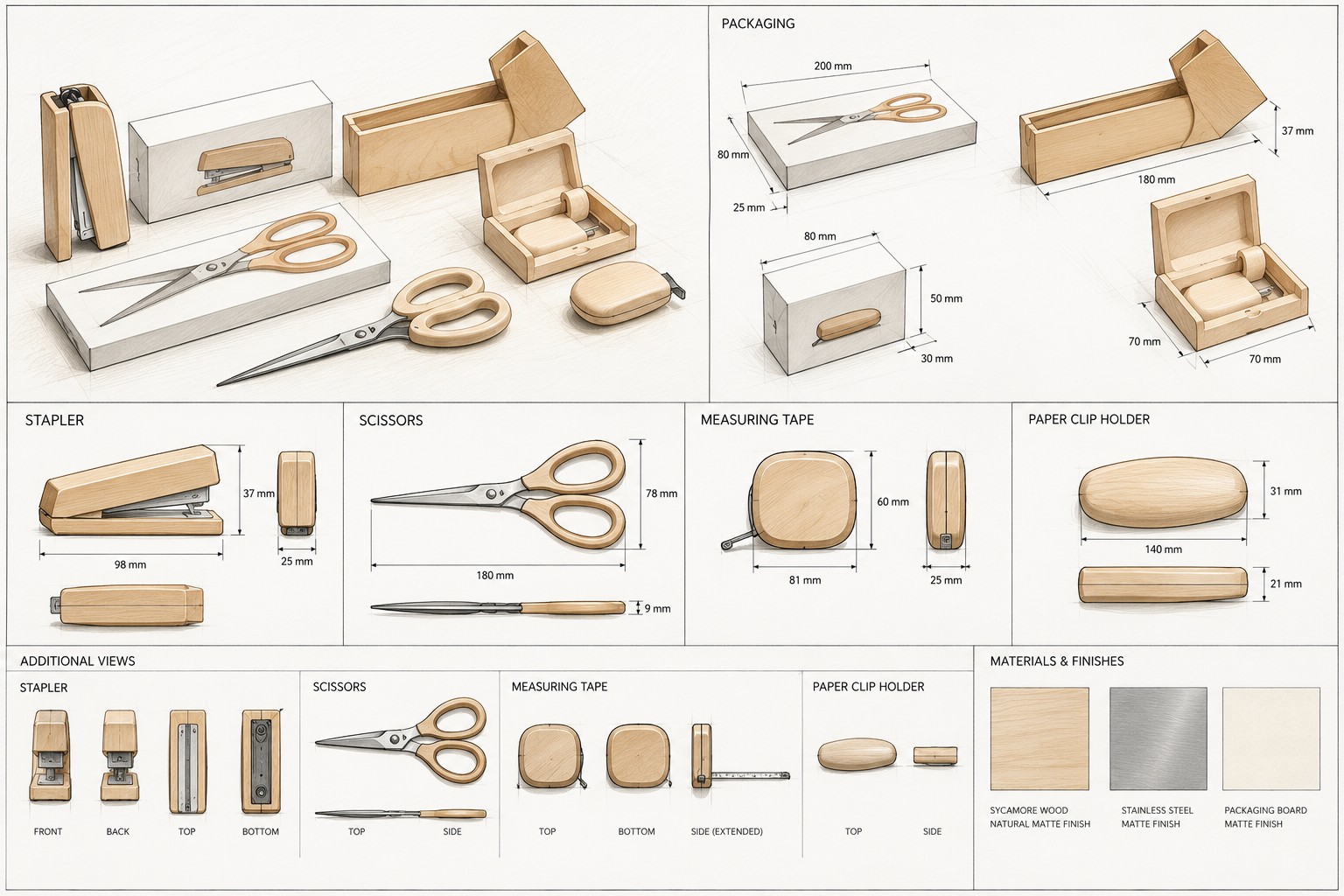
Each collection is defined by a material and a mood, then extended across staplers, scissors, tape dispensers, calendars, scales, trays and stands. Nox and Hevea explore the warmth of natural teak and rubber wood; Equinox makes contrast visible through two-tone jointing; Willow softens the desk through pale mango wood. The function stays consistent — familiar tools, more expressive tactility.

02.2

Material Becomes the Identity

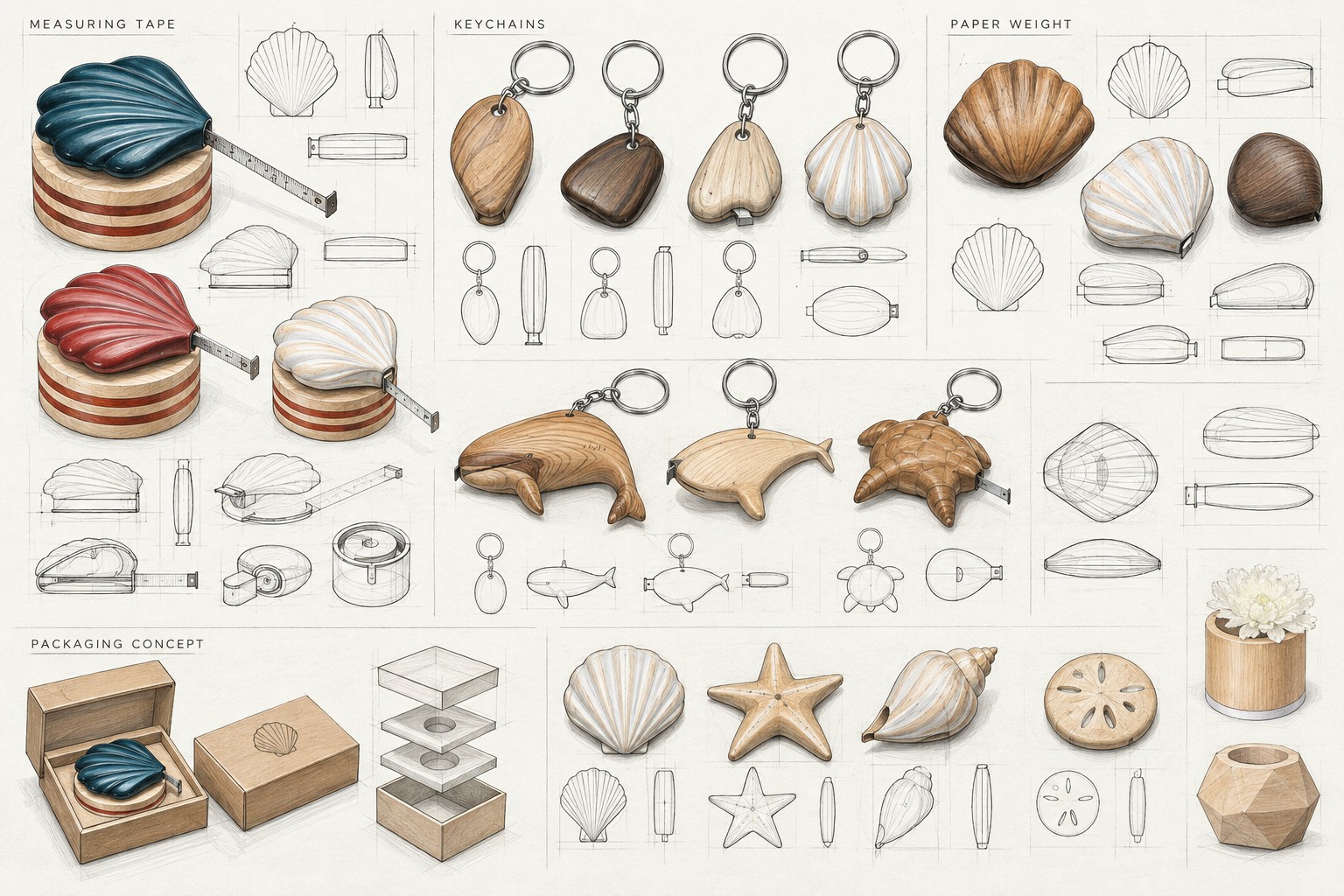
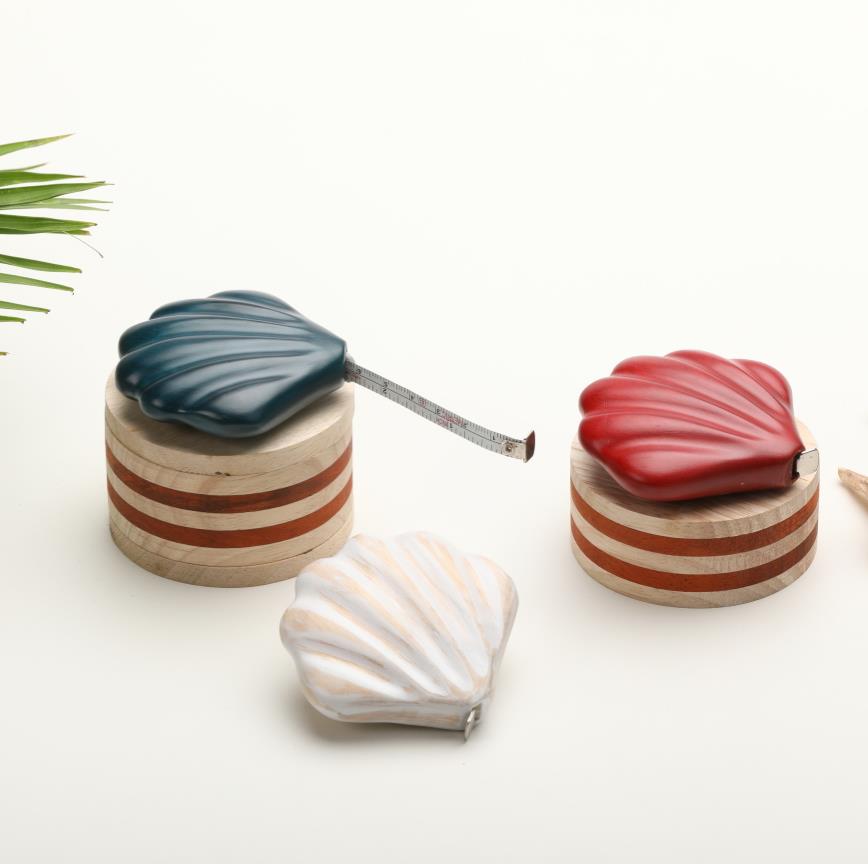
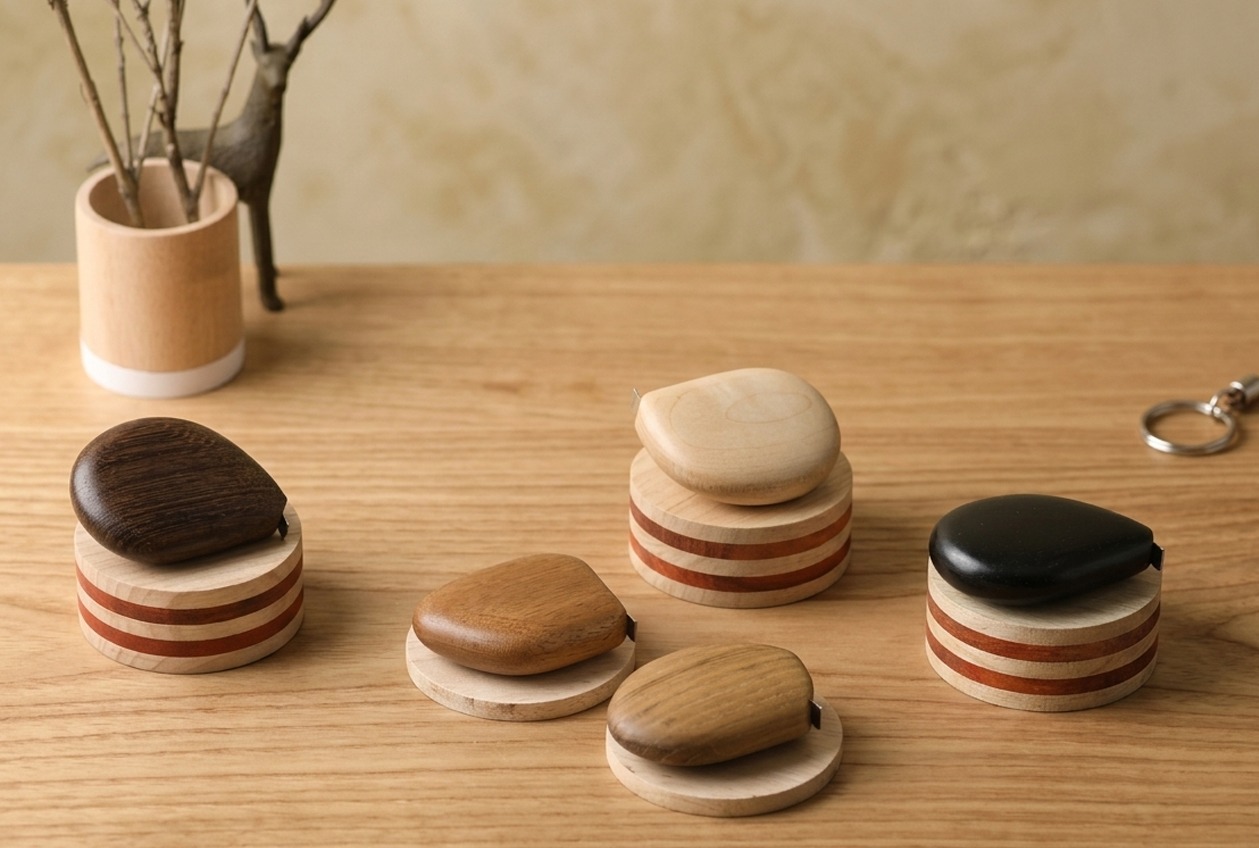
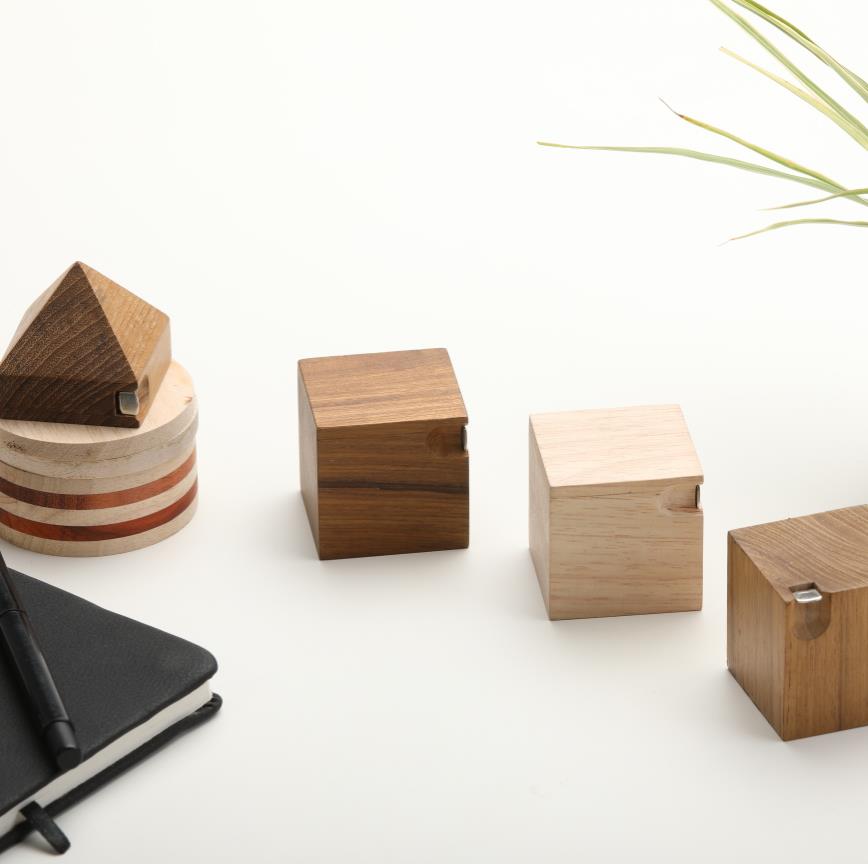
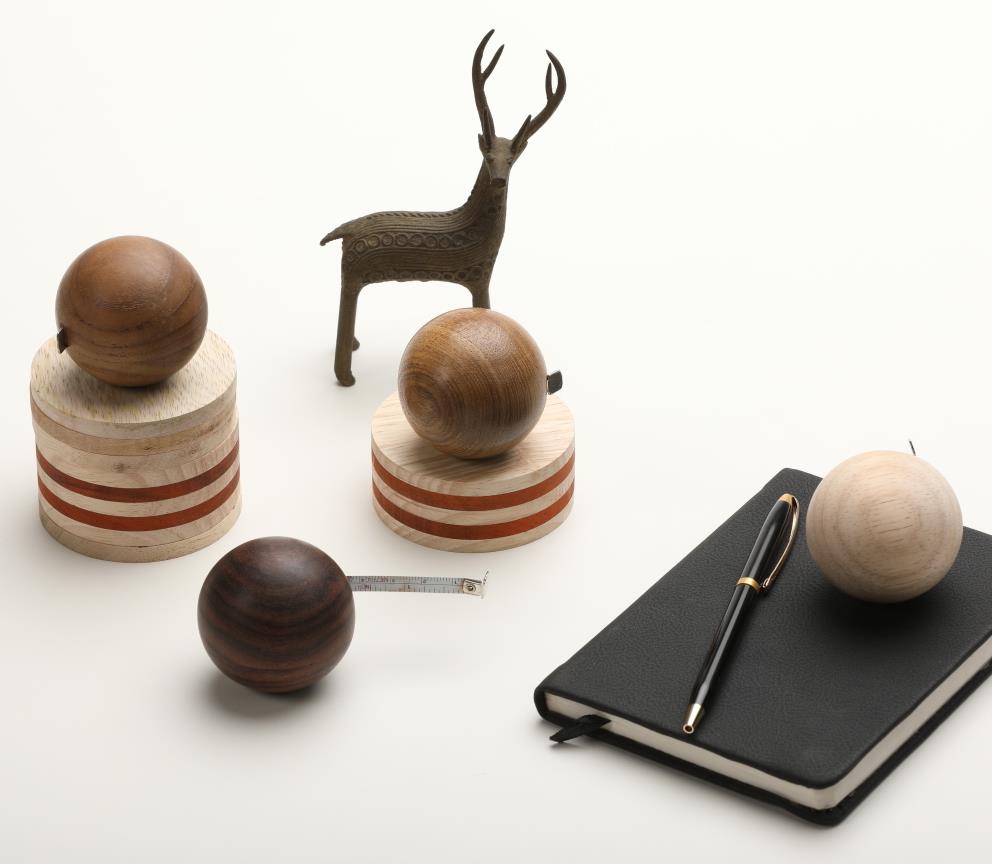
The later stationery ranges push the same system into more sculptural territory — using geometry, repetition, organic references and mixed woods. Pebble, Geometric, Sphere and Sea Shell use recognisable forms as memory hooks: easy to understand, distinctive enough to become a signature.

02.3

The Object Carries the Story

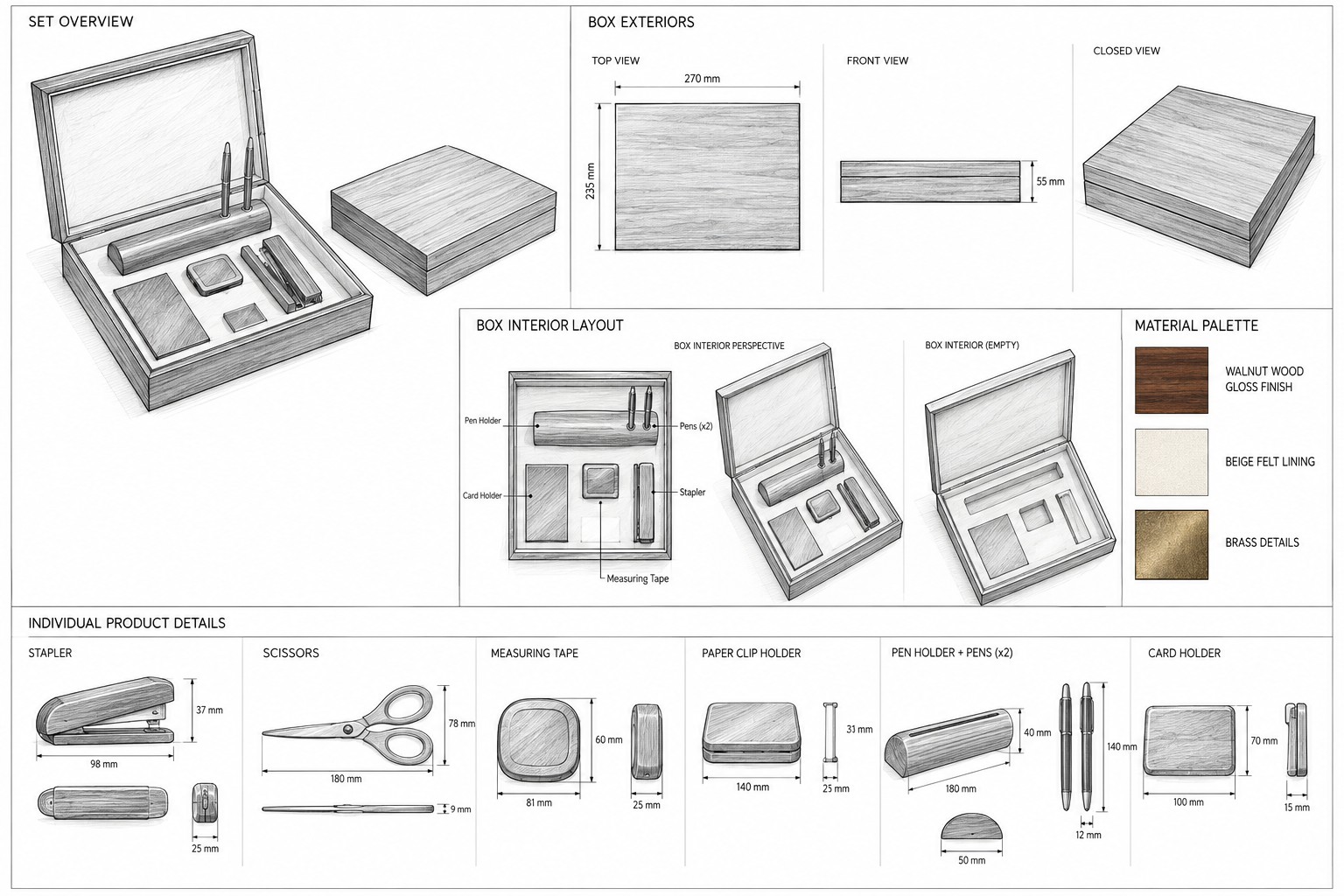
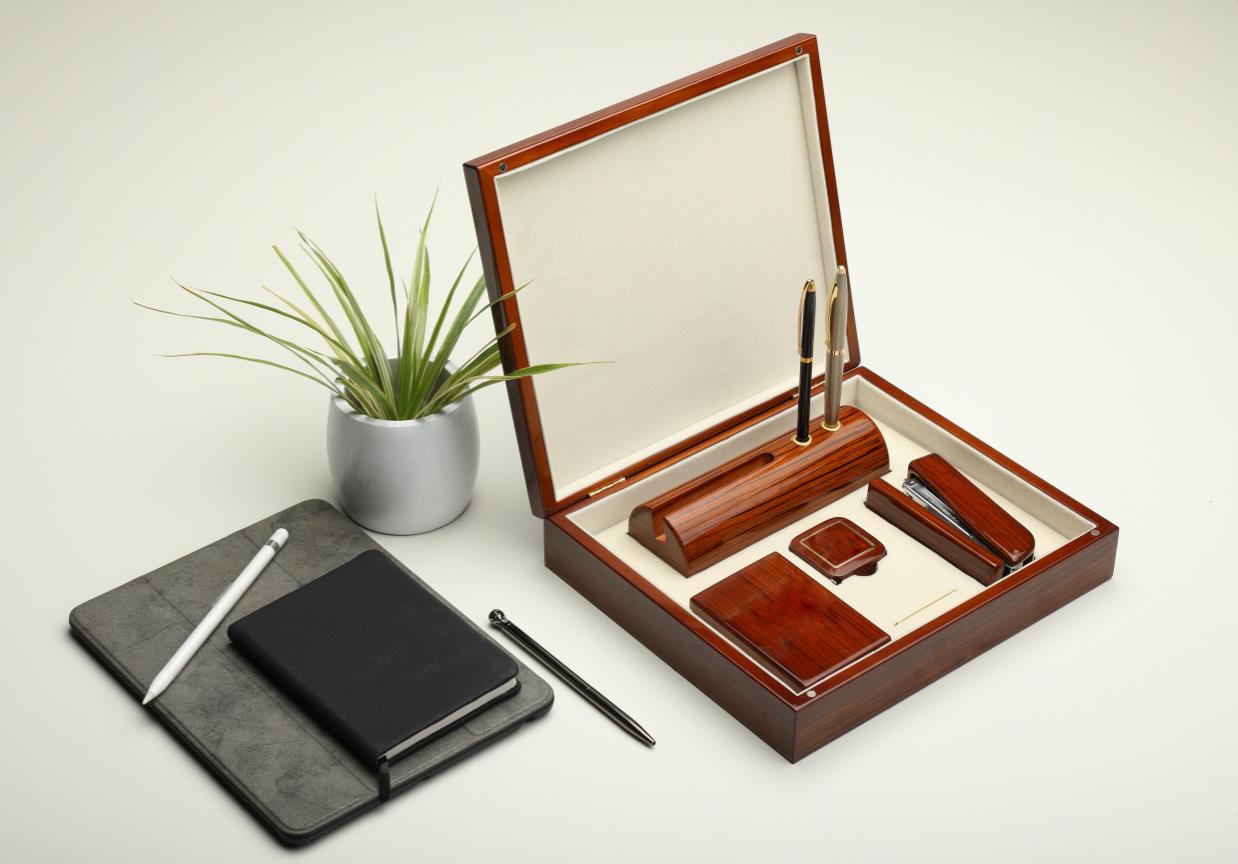
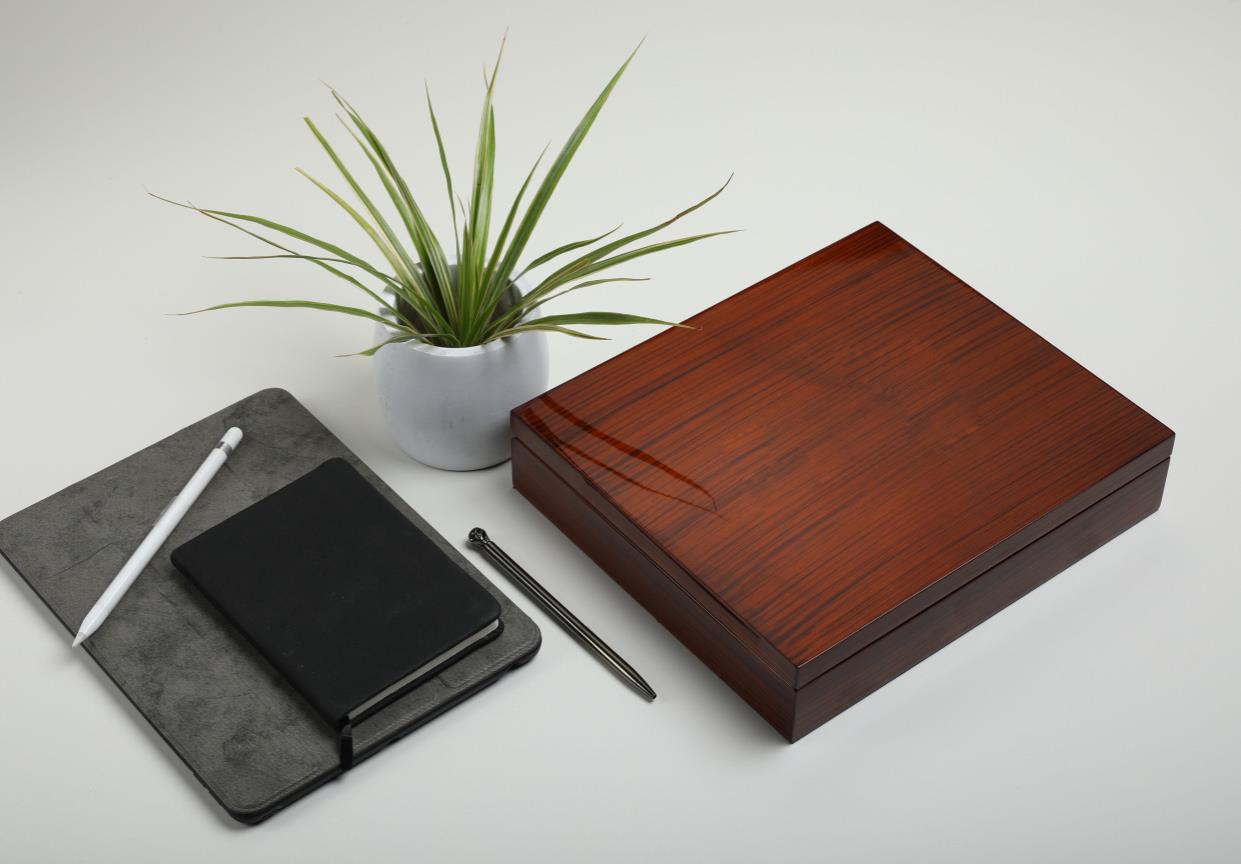
The final set narrows to one idea, built as a complete gifting system: a fitted box that opens to reveal a coordinated set of desk tools, sized and lined so every piece has its own place.

03 / Process

A Repeatable Design Method

The work is best understood as a system of decisions that can scale across categories.

01

Material

Wood species, grain, inlay and finish establish the emotional register.

02

Form

Simple geometries create a family; softened edges and proportions make objects comfortable and giftable.

03

Function

Every object remains genuinely useful even as the form becomes sculptural.

04

Ritual

Opening, holding, arranging and displaying are designed as part of the product experience.

05

Range

A strong hero object is extended into complementary items to create a coherent collection.

06

Customisation

Colour, finish and wood species flex per order, without breaking the range's identity.

The Takeaway

Useful Objects, Made Memorable

Across corporate gifting and stationery, the design opportunity is not only to make a product work. It is to give the object a point of view — through material, proportion, tactility and the story it invites the user to participate in.